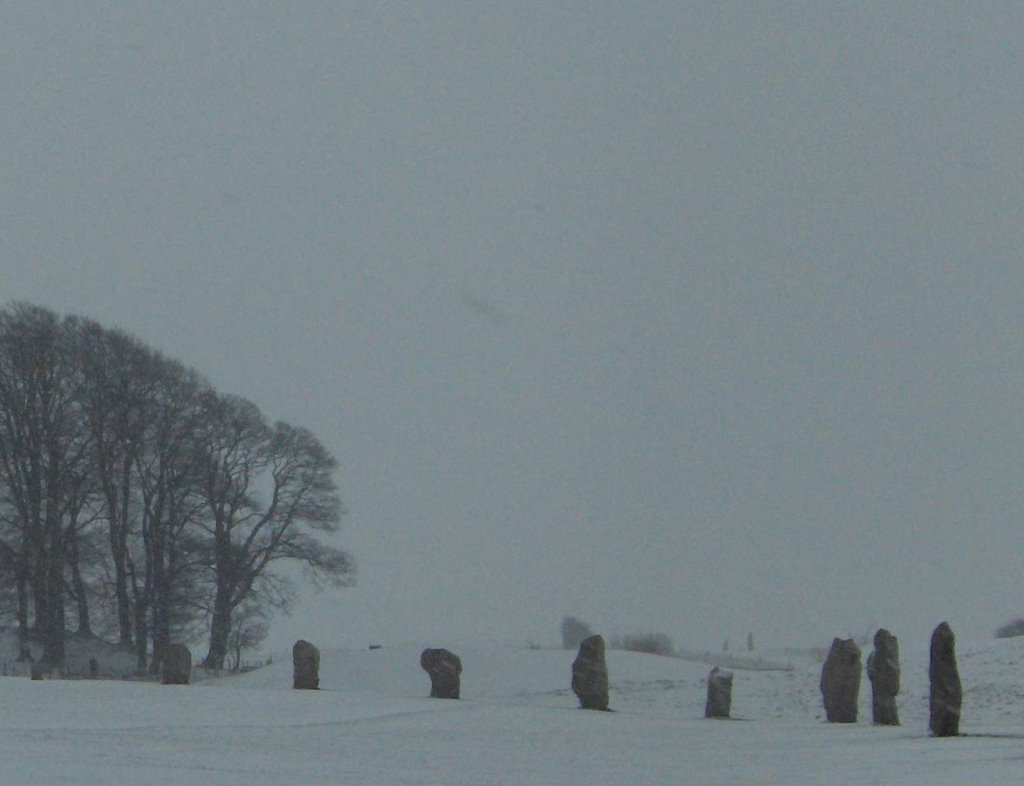
Unchanged it stands: it awes the lands
Beneath the clear dark sky;
But at what time its head sublime
It heavenward reared, and why -
The gods that see all things that be
Can better tell than I.
Rev A C Smith
Thursday, December 06, 2007

Monday, November 26, 2007

How many words
How many words has it taken to describe so briefly the feelings and the thoughts that came to me by the tumulus; thoughts that swept past and were gone, and were succeeded by others while yet the shadow of the mound had not moved from one thyme-flower to another, not the breath of a grass blade... The silk grass sighs as the wind comes carrying the blue butterfly more rapidly than his wings, A large humble-bee burrs round the green dome against which I rest; my hands are scented with thyme. The sweetness of the day, the fullness of the earth, the beauteous earth, how shall I say it?
Richard Jefferies
Richard Jefferies
Wednesday, November 07, 2007

No sitting on fences
Our Silbury, chalky old pile
Was concerned with a threat to defile
But no sitting on fences
Brought EH to their senses
Now the hill can sleep on for a while
Slumpystones
Was concerned with a threat to defile
But no sitting on fences
Brought EH to their senses
Now the hill can sleep on for a while
Slumpystones
Wednesday, October 31, 2007

Henge, barrow and midsummer hill
Henge, barrow and midsummer hill
Are stations in the sacred landscape.
Here the timeless Goddess enters
The times of her tribes. It was lifetimes back
And what it meant we have almost forgotten,
Almost forgotten.
We killed a child
With great honour and buried her body
Curled like a snail at the heart of the henge
Where earth spirits might rise through her grave,
Follow the curve of the bent bones
And spiral out among villagers dancing
The sunwheel dance that is danced in spring.
A captive ghost, in my meditation,
She takes my hand, but I cannot lead her
Beyond the ring where the magic fixed her.
She will be four years old forever,
And crowned with flowers.
But all the rest of us
Have to be laid in tribal earth
To be remade by the winter Goddess
Before we come back to the world again.
She is the sow that eats her farrow,
Old bones cracking within the barrow,
But to those whom she fails to frighten
A giver of gifts.
No corpses lie
On midsummer hill, but of all the stations
This is the saddest. The sun on high
Burns, burns as midsummer’s Queen
Hands over her whitening world to death-
The fields by severance and the woods
By slow decay. With her hair combed out
In its red gold sheaves she is perfect strength
And perfect beauty about to fade
As from this moment summer does-
And the child will leave its mother and
The long procession wind down the hill.
Tony Grist
Are stations in the sacred landscape.
Here the timeless Goddess enters
The times of her tribes. It was lifetimes back
And what it meant we have almost forgotten,
Almost forgotten.
We killed a child
With great honour and buried her body
Curled like a snail at the heart of the henge
Where earth spirits might rise through her grave,
Follow the curve of the bent bones
And spiral out among villagers dancing
The sunwheel dance that is danced in spring.
A captive ghost, in my meditation,
She takes my hand, but I cannot lead her
Beyond the ring where the magic fixed her.
She will be four years old forever,
And crowned with flowers.
But all the rest of us
Have to be laid in tribal earth
To be remade by the winter Goddess
Before we come back to the world again.
She is the sow that eats her farrow,
Old bones cracking within the barrow,
But to those whom she fails to frighten
A giver of gifts.
No corpses lie
On midsummer hill, but of all the stations
This is the saddest. The sun on high
Burns, burns as midsummer’s Queen
Hands over her whitening world to death-
The fields by severance and the woods
By slow decay. With her hair combed out
In its red gold sheaves she is perfect strength
And perfect beauty about to fade
As from this moment summer does-
And the child will leave its mother and
The long procession wind down the hill.
Tony Grist
Wednesday, October 24, 2007

Dowsing History's Mysteries
To map the magic of the Rollright Ring
To feel the lines of force pulse through the air
To lay its megalithic secrets bare
In the stillness of a summer evening
To walk in wonder through the Avebury Stones
And track earth’s whispering patterns there
Then dowse the rings about the Devil’s Chair
And know the nature of their undertones
To stand in awe within the Stonehenge zone
And check the powers that charge the winter’s air
To probe its dazzling patterns, then dare
To sound the secrets of the Slaughter Stone
To view the world from Silbury’s soaring crest
And sense the power throbbing in its core
In tune with Gaia’s geodetic law
These earthly enigmas I treasure best.
These monuments were raised by men who knew
The patterned secrets in the planet’s crust
Who harnessed Gala’s power with sacred trust
In circle, barrow, hill and avenue.
Their sacred circles now stand vandalised
The sarcens grey and shattered lie around
Razed by religious zealots to the ground
Who saw Satan in the circles they despised.
Yet Silbury Hill still thrusts towards the sun
Like the breast of a giant Amazon
Immune to all, this cryptic paragon
Preceded Mycenae, Crete and Babylon
And like the pyramids win also be
As enduring as Everest, or the sea
Denis Wheatley
To feel the lines of force pulse through the air
To lay its megalithic secrets bare
In the stillness of a summer evening
To walk in wonder through the Avebury Stones
And track earth’s whispering patterns there
Then dowse the rings about the Devil’s Chair
And know the nature of their undertones
To stand in awe within the Stonehenge zone
And check the powers that charge the winter’s air
To probe its dazzling patterns, then dare
To sound the secrets of the Slaughter Stone
To view the world from Silbury’s soaring crest
And sense the power throbbing in its core
In tune with Gaia’s geodetic law
These earthly enigmas I treasure best.
These monuments were raised by men who knew
The patterned secrets in the planet’s crust
Who harnessed Gala’s power with sacred trust
In circle, barrow, hill and avenue.
Their sacred circles now stand vandalised
The sarcens grey and shattered lie around
Razed by religious zealots to the ground
Who saw Satan in the circles they despised.
Yet Silbury Hill still thrusts towards the sun
Like the breast of a giant Amazon
Immune to all, this cryptic paragon
Preceded Mycenae, Crete and Babylon
And like the pyramids win also be
As enduring as Everest, or the sea
Denis Wheatley
Thursday, October 11, 2007

Silbury Hill
O Thou, to whom in the olden time was raised
Yon ample Mound, not fashion'd to display
An artful structure, but with better skill
Piled massive, to endure through many an age,
How simple, how majestic is thy tomb!
When temples and when palaces shall fall,
And mighty cities moulder into dust,
When to their deep foundations Time shall shake
The strong-based pyramids, shall thine remain
Amid the general ruin unsubdued,
Uninjured as the everlasting hills,
And mock the feeble power of storms and Time.
Rev William Crowe (1745-1829) of Alton Barnes, Wiltshire, England.
Yon ample Mound, not fashion'd to display
An artful structure, but with better skill
Piled massive, to endure through many an age,
How simple, how majestic is thy tomb!
When temples and when palaces shall fall,
And mighty cities moulder into dust,
When to their deep foundations Time shall shake
The strong-based pyramids, shall thine remain
Amid the general ruin unsubdued,
Uninjured as the everlasting hills,
And mock the feeble power of storms and Time.
Rev William Crowe (1745-1829) of Alton Barnes, Wiltshire, England.
Saturday, October 06, 2007

The Heart of Ireland
Skryne, Faughan, Lismullen, Tara,
Look around these hills of drama,
For if there is a heart to Ireland
It beats here, where we now stand.
Each ditch and mound, earthwork, embankment
Tells its story of burial and settlement,
Worship of ancient Gods, of gatherings
Right back to the time of the old High Kings.
The very folds in the landscape hold our history
And beyond that, our myth and mystery.
This is home to the Goddess Maebh
Honoured here three thousand years.
Once a Royal City filled the whole of Gabhra
And vast timber temples formed the sanctuary of Tara.
Here fought our heroes from the time of the Fianna,
And Kings were crowned by the Tuathá de Danann.
At the mound of Hostages, Duma na nGiall,
First home to the stone of destiny, Lia Fáil,
Perfectly aligned with sunrise Samhain and Imbolc,
And every full moon in honour of Lugh.
So standing here now, let’s contemplate
What will be Ireland’s fate,
If we build a road through the valley of Gabhra
And destroy the sacred sites round Tara?
What will the future say of us,
When we in our turn, are ancestors
If we are responsible for the desecration
Of the most powerful symbol of our nation?
So lost are we to a sense of self,
Intent on destroying our truest wealth,
Only a people who do not understand
Could so wound the heart of Ireland.
Or will we become the generation
Who refused to allow this violation?
Who’ll fight to the end like heroes before
Because we know what it is we’re fighting for.
So our children’s children’s children can stand
As we now stand on this sacred land,
Feel its heartbeat, know its power,
Cos’ we saved Tara in her darkest hour.
Dearbhaile Bradley
Chief Bard of Ynys Witrin 2007
Look around these hills of drama,
For if there is a heart to Ireland
It beats here, where we now stand.
Each ditch and mound, earthwork, embankment
Tells its story of burial and settlement,
Worship of ancient Gods, of gatherings
Right back to the time of the old High Kings.
The very folds in the landscape hold our history
And beyond that, our myth and mystery.
This is home to the Goddess Maebh
Honoured here three thousand years.
Once a Royal City filled the whole of Gabhra
And vast timber temples formed the sanctuary of Tara.
Here fought our heroes from the time of the Fianna,
And Kings were crowned by the Tuathá de Danann.
At the mound of Hostages, Duma na nGiall,
First home to the stone of destiny, Lia Fáil,
Perfectly aligned with sunrise Samhain and Imbolc,
And every full moon in honour of Lugh.
So standing here now, let’s contemplate
What will be Ireland’s fate,
If we build a road through the valley of Gabhra
And destroy the sacred sites round Tara?
What will the future say of us,
When we in our turn, are ancestors
If we are responsible for the desecration
Of the most powerful symbol of our nation?
So lost are we to a sense of self,
Intent on destroying our truest wealth,
Only a people who do not understand
Could so wound the heart of Ireland.
Or will we become the generation
Who refused to allow this violation?
Who’ll fight to the end like heroes before
Because we know what it is we’re fighting for.
So our children’s children’s children can stand
As we now stand on this sacred land,
Feel its heartbeat, know its power,
Cos’ we saved Tara in her darkest hour.
Dearbhaile Bradley
Chief Bard of Ynys Witrin 2007
Monday, October 01, 2007

1000 Oceans
well i can't believe that i would keep
keep you from flying
and i would cry 1000 more
if that's what it takes to sail you home
sail you home, sail you home
i'm aware what the rules are
but you know that i will run
you know that i will follow you
over silbury hill through the solar field
you know that i will follow you
Tori Amos http://www.youtube.com/watch?v=YGCRFCokEqI&feature=related
keep you from flying
and i would cry 1000 more
if that's what it takes to sail you home
sail you home, sail you home
i'm aware what the rules are
but you know that i will run
you know that i will follow you
over silbury hill through the solar field
you know that i will follow you
Tori Amos http://www.youtube.com/watch?v=YGCRFCokEqI&feature=related
Saturday, September 22, 2007

The motors and the constant traffic
....the sense of solitary grandeur which arose as one came slowly up across the wide deserted plain to stand alone beneath the huge trilithons, is a thing of the past. The military camps, the motors and the constant traffic along the dusty road, the wire enclosure, necessary as one must acknowledge it to be, and above all, the offensive pay-shed, so placed as to spoil and vulgarise the approach by its natural avenues, have robbed the temple of all its old romance.
J P Williams-Freeman
J P Williams-Freeman
Friday, September 21, 2007

People of Choirokoitia
Nine thousand years ago you lived here
in little round houses surrounded by little narrow alleyways
connecting each of your homes one to another.
Alleyways no wider
than the outstretched arms of a modern man.
But then you stood no taller
than one of our children of ten years or so stands now
and lived no longer than our middle years.
It was a time before the thought
of clay pots had even crossed your minds.
You ate as well as we however
perhaps even better.
Pistachios, figs, olives and prunes.
Deer, sheep, goats and pigs.
Unpackaged and unpaid for
taken from the hills all around you.
Water from your streams
fish from your rivers and from the sea.
Choirokoitia, Choirokoitia
people of Choirokoitia.
I walk along your ancient pathways
and peer through your ancient windows and doorways.
What am I looking for?
Simplicity perhaps.
No doubt your loves and losses were as rich and as sad as ours
but at least you knew one another
walking from house to house
through field and wood
laughing and arguing
living life to the full.
Nine thousand years on no-one knows anyone anymore.
You would not like it here people of Choirokoitia.
The sound of your rivers and steams have gone.
The sea supports a flotsam of rubbish you could never imagine.
Gone is the quietness that you knew.
Gone now your harmony with the changing of the year.
Gone too your finger upon the pulse of life
and your upturned hands when life lies cold.
Choirokoitia, Choirokoitia
people of Choirokoitia.
If I could travel back to be with you I would.
I would happily forfeit half my life to walk with you
picking olives and figs along the way
listening to the far-off sounds of the sea
and the mountain streams as they tumble and fall
around your village of little round houses
and little narrow alleyways.
LS
in little round houses surrounded by little narrow alleyways
connecting each of your homes one to another.
Alleyways no wider
than the outstretched arms of a modern man.
But then you stood no taller
than one of our children of ten years or so stands now
and lived no longer than our middle years.
It was a time before the thought
of clay pots had even crossed your minds.
You ate as well as we however
perhaps even better.
Pistachios, figs, olives and prunes.
Deer, sheep, goats and pigs.
Unpackaged and unpaid for
taken from the hills all around you.
Water from your streams
fish from your rivers and from the sea.
Choirokoitia, Choirokoitia
people of Choirokoitia.
I walk along your ancient pathways
and peer through your ancient windows and doorways.
What am I looking for?
Simplicity perhaps.
No doubt your loves and losses were as rich and as sad as ours
but at least you knew one another
walking from house to house
through field and wood
laughing and arguing
living life to the full.
Nine thousand years on no-one knows anyone anymore.
You would not like it here people of Choirokoitia.
The sound of your rivers and steams have gone.
The sea supports a flotsam of rubbish you could never imagine.
Gone is the quietness that you knew.
Gone now your harmony with the changing of the year.
Gone too your finger upon the pulse of life
and your upturned hands when life lies cold.
Choirokoitia, Choirokoitia
people of Choirokoitia.
If I could travel back to be with you I would.
I would happily forfeit half my life to walk with you
picking olives and figs along the way
listening to the far-off sounds of the sea
and the mountain streams as they tumble and fall
around your village of little round houses
and little narrow alleyways.
LS
Thursday, September 20, 2007

Three Counsellors
It was the fairy of the place,
Moving within a little light,
Who touched with dim and shadowy grace
The conflict at its fever height.
It seemed to whisper 'Quietness,'
Then quietly itself was gone:
Yet echoes of its mute caress
Were with me as the years went on.
It was the warrior within
Who called 'Awake, prepare for fight:
Yet lose not memory in the din:
Make of thy gentleness thy might:
'Make of thy silence words to shake
The long-enthroned kings of earth:
Make of thy will the force to break
Their towers of wantonness and mirth.'
It was the wise all-seeing soul
Who counselled neither war nor peace:
'Only be thou thyself that goal
In which the wars of time shall cease.'
George William Russell (1867-1935)
Moving within a little light,
Who touched with dim and shadowy grace
The conflict at its fever height.
It seemed to whisper 'Quietness,'
Then quietly itself was gone:
Yet echoes of its mute caress
Were with me as the years went on.
It was the warrior within
Who called 'Awake, prepare for fight:
Yet lose not memory in the din:
Make of thy gentleness thy might:
'Make of thy silence words to shake
The long-enthroned kings of earth:
Make of thy will the force to break
Their towers of wantonness and mirth.'
It was the wise all-seeing soul
Who counselled neither war nor peace:
'Only be thou thyself that goal
In which the wars of time shall cease.'
George William Russell (1867-1935)
Thursday, August 23, 2007

The Open Air
The great stone of a fallen cromlech, crouching down afar off in the plain behind me, cast its shadow in the sunny morn as it had done, so many summers, for centuries - for thousands of years: worn white by endless sunbeams - the ceaseless flood of light - the sunbeams of the centuries, the impalpable beams polishing and grinding like rushing water: silent, yet witnessing of the Past; shadowing the Present on the dial of the field: a mere dull stone but what is it the mind will not employ to express to itself its own thoughts?
Richard Jefferies
Richard Jefferies
Wednesday, August 22, 2007
Silbury time capsule
Hi,
i visited Silbury Hill on Sunday afternoon [19 August 07], it was bedraggled with construction site equipment (inert), workers' portacabin extempore village (no sign of life), persistent drizzle and lots of chalky mud everywhere; the caterpillar diggers have left a wide muddy track all the way round one side of Silbury; there is a forlorn visitors' information point, roadside of the hill, with a flimsy sign fixed to the fence, fluttering in the grey breeze. there are neither visitors nor experts in bright yellow, hard hats, enthusiastically disseminating words of wisdom: the spot is entirely vacant. above the tunnel entrance is marked out - in blue rope - the shape of a long subsidence, running up the hill, directly over the tunnel. before the ominous-looking, shuttered entrance to the re-opened tunnel stands a motionless mechanical digger, apparently abandoned? the entire site is eerily silent and resembles more the messy aftermath to some awful catastrophe, rather than the sprightly prospect of an efficient EH project, so deftly filmed for PR posterity several years ago, when the initial steps were being taken to stabilise the hill, and ultimately restore it? where are the cameras, state-of-art technology, helicopters, snappy press releases, smart presenters and television experts now? what is happening at Silbury? what is happening to Silbury?!
:(
Ric
ps. i wrote to Eric/Lord Avebury - he advises everyone concerned to write, phone or email English Heritage to object to their plan to bury a 'time capsule' inside Silbury Hill.
Thursday, August 16, 2007

A Means To An End II
A legacy, in time removed
Your guardianship to prove
Eternal rights we left behind
In trust, our World enshrined
To pay respects, protect it too
We put our trust in you
We put our trust in you
We thought our Gods would recognise
Our efforts justified
Strange the way that hopes can rise
Our vision touched the skies
Immortal gift, our love to prove
We put our trust in you
We put our trust in you
Beneath a hill of sacred soil
This modern vermin's spoil
Is this your hope, your final deed?
Where prayers are left to bleed
Resigned to this, we curse your soul
We put our trust in you
We put our trust in you
slumpy & Joy Division
Your guardianship to prove
Eternal rights we left behind
In trust, our World enshrined
To pay respects, protect it too
We put our trust in you
We put our trust in you
We thought our Gods would recognise
Our efforts justified
Strange the way that hopes can rise
Our vision touched the skies
Immortal gift, our love to prove
We put our trust in you
We put our trust in you
Beneath a hill of sacred soil
This modern vermin's spoil
Is this your hope, your final deed?
Where prayers are left to bleed
Resigned to this, we curse your soul
We put our trust in you
We put our trust in you
slumpy & Joy Division
Saturday, August 11, 2007

Solace in Stone
Seek them out, search out the Ancient Ones. Stones of Salutation. Solstice and Symmetry
Stones of Mystery. Millenniums and Magnetism. Stones of Ancients. Augurs and Alignments
Stones of Loneliness. Lunar and Leys. Stones of Ghosts. Gnomic and Geometry
Stones of Destiny. Druids and Direction. Stones of Elementals. Equinox and Equations
Stones of Ceremony. Celts and Chronology. Stones of Hypocrisy. Hedonists and Harmonics
Find their Sanctuary, find their Solace. Pitted with time, grey and ochre patched
Yet smooth as silk where hands have rubbed. In fields, woods, valleys, bog, bracken and bramble
Standing, fallen, broken, smashed by the Church. No matter their magic felt through centuries and time
For they have seen death, life and the stars. Sit in their majesty, turn and look back
See the horizons. Mothers, mapped out. Look on in wonder, best all alone
For then you will find Solace in Stone
T J Ackley
Stones of Mystery. Millenniums and Magnetism. Stones of Ancients. Augurs and Alignments
Stones of Loneliness. Lunar and Leys. Stones of Ghosts. Gnomic and Geometry
Stones of Destiny. Druids and Direction. Stones of Elementals. Equinox and Equations
Stones of Ceremony. Celts and Chronology. Stones of Hypocrisy. Hedonists and Harmonics
Find their Sanctuary, find their Solace. Pitted with time, grey and ochre patched
Yet smooth as silk where hands have rubbed. In fields, woods, valleys, bog, bracken and bramble
Standing, fallen, broken, smashed by the Church. No matter their magic felt through centuries and time
For they have seen death, life and the stars. Sit in their majesty, turn and look back
See the horizons. Mothers, mapped out. Look on in wonder, best all alone
For then you will find Solace in Stone
T J Ackley
Saturday, August 04, 2007

Silbury Speaks
Once, men knew no science
But saw how things worked,
Couldn’t fly to the moon
Yet possessed it,
Never dreamt the world was round
But knew it was whole.
Such men raised me with those simple tools
And here I stand
A monument, magnificent,
To simple men and simple ways
That tells an ancient Truth
That knowing much is knowing less.
Why then did you not
Simply protect me?
Erich Thrupp
But saw how things worked,
Couldn’t fly to the moon
Yet possessed it,
Never dreamt the world was round
But knew it was whole.
Such men raised me with those simple tools
And here I stand
A monument, magnificent,
To simple men and simple ways
That tells an ancient Truth
That knowing much is knowing less.
Why then did you not
Simply protect me?
Erich Thrupp
Thursday, July 26, 2007

Windover
I guard the gateway
Hold two spears
Or staffs
Or rakes
Through the years
The truth has misted
Clearly a man
Though my hips might say other
Wise Mother I might be
God to many
Most certainly
Yet as you approach me
Kerbstones are all you will see
Industrial covering for the mystery
Once I was the Green Man
Seen only at dawn
Upon my Down
By Mrs. Downs
Of that village below
Or as the snow melted
Upon me
Before around me
Yet I became harder to see
So they bricked me in
That I might remain seen
Though so faint in the earth
My left foot turned east
Was my face lost then?
Did spear become stick?
Did they add hips?
Did I lose a dick?
And then in your sixties
Brick became slab
Call it drab
If you like
My essence
Still lies beneath.
Atop my hill
Lie two barrows
One Long and for many
One round and for a chief
The long one it points
Directly at my head
And however many lie within
They lie undisturbed
In a grave long enough
To be mine
Approached by a steep Cursus
From which to watch Sirius rise
The round one
Lies in line with my body
Abused and raided by an antiquary
One Mr. Mantell
Yet still with its majesty
Though no longer a king
Two ancient cultures
Lined graves up on me
And five thousand years back
From where cars now park
On a cold winter’s night
Orion the Hunter
Dressed in his stars
Would have walked my horizon
Am I he?
Am I the Stonehenge Sun God?
Cernunnos of the Celts?
Or Caesar of the coin?
Or Alfred’s estate marker?
Or Sampson, carved by monks
On their day off?
I have been much to many
Else I would have died
I may be much to you
Or just a man in the side
Of a hill
Still
Yet on a mound
‘Neath a chalk-pit next to me
People now gather
To give thanks to their mother
And father, the Earth
And to honour their gods
And for what it is worth
I thank you
For you sustain me
And I shall be whatever you wish
Until the Downs crumble
And fish swim above me
Many years from now
When we shall all lie
Underneath sea or sky
For as rock became human
So too human stone
The cycle is endless
For you and I belong to the Land
And to it we return
Whether short or Long Man.
Cursuswalker
Lammas 2001
Hold two spears
Or staffs
Or rakes
Through the years
The truth has misted
Clearly a man
Though my hips might say other
Wise Mother I might be
God to many
Most certainly
Yet as you approach me
Kerbstones are all you will see
Industrial covering for the mystery
Once I was the Green Man
Seen only at dawn
Upon my Down
By Mrs. Downs
Of that village below
Or as the snow melted
Upon me
Before around me
Yet I became harder to see
So they bricked me in
That I might remain seen
Though so faint in the earth
My left foot turned east
Was my face lost then?
Did spear become stick?
Did they add hips?
Did I lose a dick?
And then in your sixties
Brick became slab
Call it drab
If you like
My essence
Still lies beneath.
Atop my hill
Lie two barrows
One Long and for many
One round and for a chief
The long one it points
Directly at my head
And however many lie within
They lie undisturbed
In a grave long enough
To be mine
Approached by a steep Cursus
From which to watch Sirius rise
The round one
Lies in line with my body
Abused and raided by an antiquary
One Mr. Mantell
Yet still with its majesty
Though no longer a king
Two ancient cultures
Lined graves up on me
And five thousand years back
From where cars now park
On a cold winter’s night
Orion the Hunter
Dressed in his stars
Would have walked my horizon
Am I he?
Am I the Stonehenge Sun God?
Cernunnos of the Celts?
Or Caesar of the coin?
Or Alfred’s estate marker?
Or Sampson, carved by monks
On their day off?
I have been much to many
Else I would have died
I may be much to you
Or just a man in the side
Of a hill
Still
Yet on a mound
‘Neath a chalk-pit next to me
People now gather
To give thanks to their mother
And father, the Earth
And to honour their gods
And for what it is worth
I thank you
For you sustain me
And I shall be whatever you wish
Until the Downs crumble
And fish swim above me
Many years from now
When we shall all lie
Underneath sea or sky
For as rock became human
So too human stone
The cycle is endless
For you and I belong to the Land
And to it we return
Whether short or Long Man.
Cursuswalker
Lammas 2001
Friday, July 13, 2007

Something beyond the books
There is something beyond the philosophies in the light, in the grass-blades, the leaf, the grasshopper, the sparrow on the wall. Some day the great and beautiful thought which hovers on the confines of the mind will at last alight. The whole sky is full of abounding hope. Something beyond the books, that is consolation.
Richard Jefferies
Richard Jefferies
Thursday, July 05, 2007

The Shadow on the Stone
I went by the Druid stone
That broods in the garden white and lone,
And I stopped and looked at the shifting shadows
That at some moments fall thereon
From the tree hard by with a rhythmic swing,
And they shaped in my imagining
To the shade that a well-known head and shoulders
Threw there when she was gardening.
I thought her behind my back,
Yea, her I long had learned to lack,
And I said: ‘I am sure you are standing behind me,
Though how do you get into this old track?’
And there was no sound but the fall of a leaf
As a sad response; and to keep down grief
I would not turn my head to discover
That there was nothing in my belief.
Yet I wanted to look and see
That nobody stood at the back of me;
But I thought once more: ‘Nay, I’ll not unvision
A shape which, somehow, there may be.’
So I went on softly from the glade,
And left her behind me throwing her shade,
As she were indeed an apparition—
My head unturned lest my dream should fade.
Thomas Hardy (1840-1928)
That broods in the garden white and lone,
And I stopped and looked at the shifting shadows
That at some moments fall thereon
From the tree hard by with a rhythmic swing,
And they shaped in my imagining
To the shade that a well-known head and shoulders
Threw there when she was gardening.
I thought her behind my back,
Yea, her I long had learned to lack,
And I said: ‘I am sure you are standing behind me,
Though how do you get into this old track?’
And there was no sound but the fall of a leaf
As a sad response; and to keep down grief
I would not turn my head to discover
That there was nothing in my belief.
Yet I wanted to look and see
That nobody stood at the back of me;
But I thought once more: ‘Nay, I’ll not unvision
A shape which, somehow, there may be.’
So I went on softly from the glade,
And left her behind me throwing her shade,
As she were indeed an apparition—
My head unturned lest my dream should fade.
Thomas Hardy (1840-1928)
Friday, June 29, 2007

One eye on your career
You said you'd be our champion, a power to our cause
To stand like stones, upright and still, an influential force
Yet when we asked, our hands outstretched, your sense of duty failed
You turned your back, ignored our pleas, our trust in you derailed
You promised us your guardianship, is this how a guard behaves?
Can't you feel ten thousand corpses turning in their graves?
No passion in your governorship, a task but nothing more
Then ditch the burden as your predecessor did before
Oh, to see each promise kept, not cast aside with fear
No 'popular decisions' with one eye on your career
Just sense and sensitivity for all that could be lost
Preserving England's heritage, no matter what the cost
slumpystones
To stand like stones, upright and still, an influential force
Yet when we asked, our hands outstretched, your sense of duty failed
You turned your back, ignored our pleas, our trust in you derailed
You promised us your guardianship, is this how a guard behaves?
Can't you feel ten thousand corpses turning in their graves?
No passion in your governorship, a task but nothing more
Then ditch the burden as your predecessor did before
Oh, to see each promise kept, not cast aside with fear
No 'popular decisions' with one eye on your career
Just sense and sensitivity for all that could be lost
Preserving England's heritage, no matter what the cost
slumpystones
Saturday, June 16, 2007

The New Seven Wonders?
The New Seven Wonders?
But EH's blunders
Will drive a big road through them all
Put some tat in the mound
Don't disclose what we found
Stick a campsite in Durrington Walls
If the doorway's too narrow
We'll widen the barrow
To let wheelchairs get inside West Kennet
And Avebury's ditch oughtta
Be filled up with water
We'll ignore when you shout "Gordon Bennet!"
Seven Wonders? That many?
We don't think we've got any
That haven't been paved and restored
With EH's protection
And metal detection
There's so little to add to the hoard
Could we settle for two?
Silbury, Avebury too
Maybe Stonehenge if we can agree
On the council decision
Of a two-mile incision
To bury the A303
Stanton Drew-Vegas weddings
Slaughter Stone fake beheadings
And souvenir shops full of bones
And the rich men in hearses
Can park near the Cursus
And bury their dead at the stones
So it's Wessex-orama
A crisis, no drama
A Wonderworld built on the plain
Where the visitors enter
The visitors' centre
And see everything from a train
slumpystones
But EH's blunders
Will drive a big road through them all
Put some tat in the mound
Don't disclose what we found
Stick a campsite in Durrington Walls
If the doorway's too narrow
We'll widen the barrow
To let wheelchairs get inside West Kennet
And Avebury's ditch oughtta
Be filled up with water
We'll ignore when you shout "Gordon Bennet!"
Seven Wonders? That many?
We don't think we've got any
That haven't been paved and restored
With EH's protection
And metal detection
There's so little to add to the hoard
Could we settle for two?
Silbury, Avebury too
Maybe Stonehenge if we can agree
On the council decision
Of a two-mile incision
To bury the A303
Stanton Drew-Vegas weddings
Slaughter Stone fake beheadings
And souvenir shops full of bones
And the rich men in hearses
Can park near the Cursus
And bury their dead at the stones
So it's Wessex-orama
A crisis, no drama
A Wonderworld built on the plain
Where the visitors enter
The visitors' centre
And see everything from a train
slumpystones

The pattern
Home is where one starts from. As we grow older
The world becomes stranger, the pattern more complicated
Of dead and living. Not the intense moment
Isolated, with no before and after,
But a lifetime burning in every moment
And not the lifetime of one man only
But of old stones that cannot be deciphered.
T S Eliot
Thursday, May 24, 2007

Who never ask
The Old Man leaves his Road to those
Who love it no less since it lost purpose,
Who never ask what History is up to,
So cannot act as if they knew:
W H Auden
Who love it no less since it lost purpose,
Who never ask what History is up to,
So cannot act as if they knew:
W H Auden
Saturday, May 19, 2007

Peace of Iona
peace of the glancing, dancing waves
peace of the white sands
peace of Iona
peace of the singing wind
peace of the stones
peace of Iona
peace of the crying gulls
peace of the humming bees
peace of the noontime stillness
peace of dreaming hills
peace of the breath of angels
peace of Iona
peace of the saints and seekers
peace of the monks and druids
peace of the resting place of kings
peace of the ruins
peace of doves in the bell tower
peace of Iona
peace of the glad heart
peace of the rested mind
peace of my lover's pots and potions
peace of her healing hands
peace of her lazy laughter
peace of Iona
peace of the unseen
peace of the spirit
peace of Iona
peace of the unseen
peace of the Spirit
peace of Iona
Mike Scott
peace of the white sands
peace of Iona
peace of the singing wind
peace of the stones
peace of Iona
peace of the crying gulls
peace of the humming bees
peace of the noontime stillness
peace of dreaming hills
peace of the breath of angels
peace of Iona
peace of the saints and seekers
peace of the monks and druids
peace of the resting place of kings
peace of the ruins
peace of doves in the bell tower
peace of Iona
peace of the glad heart
peace of the rested mind
peace of my lover's pots and potions
peace of her healing hands
peace of her lazy laughter
peace of Iona
peace of the unseen
peace of the spirit
peace of Iona
peace of the unseen
peace of the Spirit
peace of Iona
Mike Scott
Thursday, May 03, 2007

The Henge
Swing the antler pick and make it work
Dig the earth, Mothers bounty plunge
Ditch from flat make, bank from level make
Lower it and raise it deep and high
Enclose it, and shield it from the curious eye
And within ahh within what do we protect?
The Holies, the market, the meeting, the bridepost
The Folk join and the Folk separate all within the bank
Sunrise and Sunset, Mid-Winter and Summer
The cows graze and wander the sacred ways
The grass grows green, the pits are dug, fires are lit
Flint sharp and bone white, amber and jet lie beaded
Within the embrace of Mothers arms, young child and dog
Feasts remains and alder and ash branches soon to rot
Beaker tall and pot with mouth wide, agape
The sanctuary and the secular one indivisible
So I swing the antler pick and make it work
Edward Radfall
Dig the earth, Mothers bounty plunge
Ditch from flat make, bank from level make
Lower it and raise it deep and high
Enclose it, and shield it from the curious eye
And within ahh within what do we protect?
The Holies, the market, the meeting, the bridepost
The Folk join and the Folk separate all within the bank
Sunrise and Sunset, Mid-Winter and Summer
The cows graze and wander the sacred ways
The grass grows green, the pits are dug, fires are lit
Flint sharp and bone white, amber and jet lie beaded
Within the embrace of Mothers arms, young child and dog
Feasts remains and alder and ash branches soon to rot
Beaker tall and pot with mouth wide, agape
The sanctuary and the secular one indivisible
So I swing the antler pick and make it work
Edward Radfall
Friday, April 27, 2007

The Ancient Druids
The ancient Druids offer’d to their gods
A human sacrifice; and criminals
On their stone altars bled beneath the knife
The priestly arm upraised, rudely to plunge
Into an erring brother’s living heart,
Or else, in osier cages first confined,
Expired in flames lit by some priestly hand:
And we, whose scaffolds oft have reek’d with gore
Of earth’s best benefactors; we, whose cells
Have prison’d up the patriot and divine;
And who still strangle with the hangman’s rope
To teach the sanctity of human life;
And ever study how to cheat in trade
Or kill in war with most proficiency,
Self-righteous hypocrites who but deceive
Ourselves and one another; we despise
The Druid for his paganism, meanwhile
We worship Gold as though it were a god,
And call ourselves good Christians
Peter Proletarius
A human sacrifice; and criminals
On their stone altars bled beneath the knife
The priestly arm upraised, rudely to plunge
Into an erring brother’s living heart,
Or else, in osier cages first confined,
Expired in flames lit by some priestly hand:
And we, whose scaffolds oft have reek’d with gore
Of earth’s best benefactors; we, whose cells
Have prison’d up the patriot and divine;
And who still strangle with the hangman’s rope
To teach the sanctity of human life;
And ever study how to cheat in trade
Or kill in war with most proficiency,
Self-righteous hypocrites who but deceive
Ourselves and one another; we despise
The Druid for his paganism, meanwhile
We worship Gold as though it were a god,
And call ourselves good Christians
Peter Proletarius
Sunday, April 22, 2007

Like the floating bubbles of events drowned in time
When the ritual and whatever its accompaniment may have been of masks, effigies and offerings have vanished so long ago, when there is no stir of emotion and the ghost which keeps emotion alive, when the very people responsible for raising these mounds have been overwhelmed, absorbed and forgotten, then their detailed study can become lifeless enough. Better perhaps to look at them with knowledge but with knowledge unexpressed, these round barrows that are like the floating bubbles of events drowned in time.
Jacquetta Hawkes
Friday, April 20, 2007

The Rocking Stone
Petite, a Uchon montais
Dans le bois qui abrite
La pierre qui croule
Devant le mystere tous s'esclaffaient
A qui la ferait basculer.
A plusieurs ils y arrivaient
imperceptiblement.
Ravis de leur exploit.
Pourtant la pierre
jamais son socle ne quittait,
Resistant: triomphante.
De retour
un jour de mes grandes annees
Dans le silence,
En la touchant avec reverence,
J'ai bascule dans un autre monde
Vers sa realite interieure
Tel est le vrai mystere
De ces anciennes pierres.
Michelle
When small I used to go up to Uchon
In the woods which shelters
The rocking stone
In front of the mystery all used to exclaim
to whom would make it rock.
Several together could do it
imperceptibly.
Delighted with their feat.
However the stone
would never shift from its base
resisting: triumphant.
Having returned
One day now in my later years
In the silence
Touching it with respect,
I went over to another world
Towards its inner reality
Such is the real mystery
Of those ancient stones.
Dans le bois qui abrite
La pierre qui croule
Devant le mystere tous s'esclaffaient
A qui la ferait basculer.
A plusieurs ils y arrivaient
imperceptiblement.
Ravis de leur exploit.
Pourtant la pierre
jamais son socle ne quittait,
Resistant: triomphante.
De retour
un jour de mes grandes annees
Dans le silence,
En la touchant avec reverence,
J'ai bascule dans un autre monde
Vers sa realite interieure
Tel est le vrai mystere
De ces anciennes pierres.
Michelle
When small I used to go up to Uchon
In the woods which shelters
The rocking stone
In front of the mystery all used to exclaim
to whom would make it rock.
Several together could do it
imperceptibly.
Delighted with their feat.
However the stone
would never shift from its base
resisting: triumphant.
Having returned
One day now in my later years
In the silence
Touching it with respect,
I went over to another world
Towards its inner reality
Such is the real mystery
Of those ancient stones.
Wednesday, April 18, 2007

The Museum of Stones
This is your museum of stones, assembled in matchbox and tin,
collected from roadside, culvert, and viaduct,
battlefield, threshing floor, basilica, abattoir,
stones loosened by tanks in the streets
of a city whose earliest map was drawn in ink on linen,
schoolyard stones in the hand of a corpse,
pebble from Apollinaire’s oui,
stone of the mind within us
carried from one silence to another,
stone of cromlech and cairn, schist and shale, hornblende,
agate, marble, millstones, and ruins of choirs and shipyards,
chalk, marl, and mudstone from temples and tombs,
stone from the silvery grass near the scaffold,
stone from the tunnel lined with bones,
lava of the city’s entombment,
chipped from lighthouse, cell wall, scriptorium,
paving stones from the hands of those who rose against the army,
stones where the bells had fallen, where the bridges were blown,
those that had flown through windows and weighted petitions,
feldspar, rose quartz, slate, blueschist, gneiss, and chert,
fragments of an abbey at dusk, sandstone toe
of a Buddha mortared at Bamiyan,
stone from the hill of three crosses and a crypt,
from a chimney where storks cried like human children,
stones newly fallen from stars, a stillness of stones, a heart,
altar and boundary stone, marker and vessel, first cast, lode, and hail,
bridge stones and others to pave and shut up with,
stone apple, stone basil, beech, berry, stone brake,
stone bramble, stone fern, lichen, liverwort, pippin, and root,
concretion of the body, as blind as cold as deaf,
all earth a quarry, all life a labor, stone-faced, stone-drunk
with hope that this assemblage, taken together, would become
a shrine or holy place, an ossuary, immovable and sacred,
like the stone that marked the path of the sun as it entered the human dawn.
Carolyn Forché
collected from roadside, culvert, and viaduct,
battlefield, threshing floor, basilica, abattoir,
stones loosened by tanks in the streets
of a city whose earliest map was drawn in ink on linen,
schoolyard stones in the hand of a corpse,
pebble from Apollinaire’s oui,
stone of the mind within us
carried from one silence to another,
stone of cromlech and cairn, schist and shale, hornblende,
agate, marble, millstones, and ruins of choirs and shipyards,
chalk, marl, and mudstone from temples and tombs,
stone from the silvery grass near the scaffold,
stone from the tunnel lined with bones,
lava of the city’s entombment,
chipped from lighthouse, cell wall, scriptorium,
paving stones from the hands of those who rose against the army,
stones where the bells had fallen, where the bridges were blown,
those that had flown through windows and weighted petitions,
feldspar, rose quartz, slate, blueschist, gneiss, and chert,
fragments of an abbey at dusk, sandstone toe
of a Buddha mortared at Bamiyan,
stone from the hill of three crosses and a crypt,
from a chimney where storks cried like human children,
stones newly fallen from stars, a stillness of stones, a heart,
altar and boundary stone, marker and vessel, first cast, lode, and hail,
bridge stones and others to pave and shut up with,
stone apple, stone basil, beech, berry, stone brake,
stone bramble, stone fern, lichen, liverwort, pippin, and root,
concretion of the body, as blind as cold as deaf,
all earth a quarry, all life a labor, stone-faced, stone-drunk
with hope that this assemblage, taken together, would become
a shrine or holy place, an ossuary, immovable and sacred,
like the stone that marked the path of the sun as it entered the human dawn.
Carolyn Forché
Tuesday, April 10, 2007

Carnac
Du bois de Ker-Melo jusqu'au Moulin de Teir,
J'ai passe tout le jour sur le bord de la mer,
Respirant sous les pins leur odeur de resine,
Poussant devant mes pieds leur feuille lisse et fine,
Et d'instants en instants, par-dessus Saint Michel,
Lorsqu'eclatait le bruit de la barre d'Enn-Tell,
M'arretant pour entendre: au milieu des bruyeres,
Carnac m'apparaissait avec toutes ses pierres,
Et parmi les men-hir erraient comme autrefois
Les vieux guerriers des clans, leurs pretres et leurs rois.
Auguste Brizeux (1803-1858)
From the woods of Ker-Melo up to the mill of Teir,
I spent all day along the seashore,
Breathing under the pines their resinous smell,
Pushing in front of my feet their fine soft needles,
And from time to time, beyond Saint Michel,
When was bursting the noise of the dam of Enn-Tell,
Stopping to listen: amidst the heather,
Carnac with all its stones appeared to me,
and among the menhirs were roaming like long ago
the old clan warriors, their priests and their kings.
J'ai passe tout le jour sur le bord de la mer,
Respirant sous les pins leur odeur de resine,
Poussant devant mes pieds leur feuille lisse et fine,
Et d'instants en instants, par-dessus Saint Michel,
Lorsqu'eclatait le bruit de la barre d'Enn-Tell,
M'arretant pour entendre: au milieu des bruyeres,
Carnac m'apparaissait avec toutes ses pierres,
Et parmi les men-hir erraient comme autrefois
Les vieux guerriers des clans, leurs pretres et leurs rois.
Auguste Brizeux (1803-1858)
From the woods of Ker-Melo up to the mill of Teir,
I spent all day along the seashore,
Breathing under the pines their resinous smell,
Pushing in front of my feet their fine soft needles,
And from time to time, beyond Saint Michel,
When was bursting the noise of the dam of Enn-Tell,
Stopping to listen: amidst the heather,
Carnac with all its stones appeared to me,
and among the menhirs were roaming like long ago
the old clan warriors, their priests and their kings.
Wednesday, April 04, 2007

Cowt's Grave
This is the bonny brae, the green,
yet sacred to he brave,
Where still, of ancient size, is seen
Gigantic Kielder's grave.
The lonely shepherd loves to mark
The daisy springing fair,
Where weeps the birch of silver bark,
With long dishevelled hair.
The grave is green, and round is spread
The curling lad-fern;
That fatal day the mould was red,
No moss was on the cairn.
Where weeps the birch with branches green
Without the holy ground,
Between two ancient stones is seen
The warrior's ridgey mound.
And the hunters bold of Kielders train,
Within yon castle's wall,
In a deadly sleep must aye remain
Till the ruin'd towers down fall.
Each in his hunters garb array'd,
Each holds his bugle horn;
Their keen hounds at their feet are laid,
That ne'er shall wake the morn.
Walter Scott (1771–1832)
yet sacred to he brave,
Where still, of ancient size, is seen
Gigantic Kielder's grave.
The lonely shepherd loves to mark
The daisy springing fair,
Where weeps the birch of silver bark,
With long dishevelled hair.
The grave is green, and round is spread
The curling lad-fern;
That fatal day the mould was red,
No moss was on the cairn.
Where weeps the birch with branches green
Without the holy ground,
Between two ancient stones is seen
The warrior's ridgey mound.
And the hunters bold of Kielders train,
Within yon castle's wall,
In a deadly sleep must aye remain
Till the ruin'd towers down fall.
Each in his hunters garb array'd,
Each holds his bugle horn;
Their keen hounds at their feet are laid,
That ne'er shall wake the morn.
Walter Scott (1771–1832)
Thursday, March 29, 2007

Stonehenge
drops of rain running
over lichen-green sarsens
~ distant misty hills
humid summer night
sun melts into horizon
between old grey stones
unseen influences
dream the world into being
~ mandala of stars
stones reverberate
~ the ancient song of the wind
whistling up spirits
Yvonne Aburrow
over lichen-green sarsens
~ distant misty hills
humid summer night
sun melts into horizon
between old grey stones
unseen influences
dream the world into being
~ mandala of stars
stones reverberate
~ the ancient song of the wind
whistling up spirits
Yvonne Aburrow
Friday, March 23, 2007
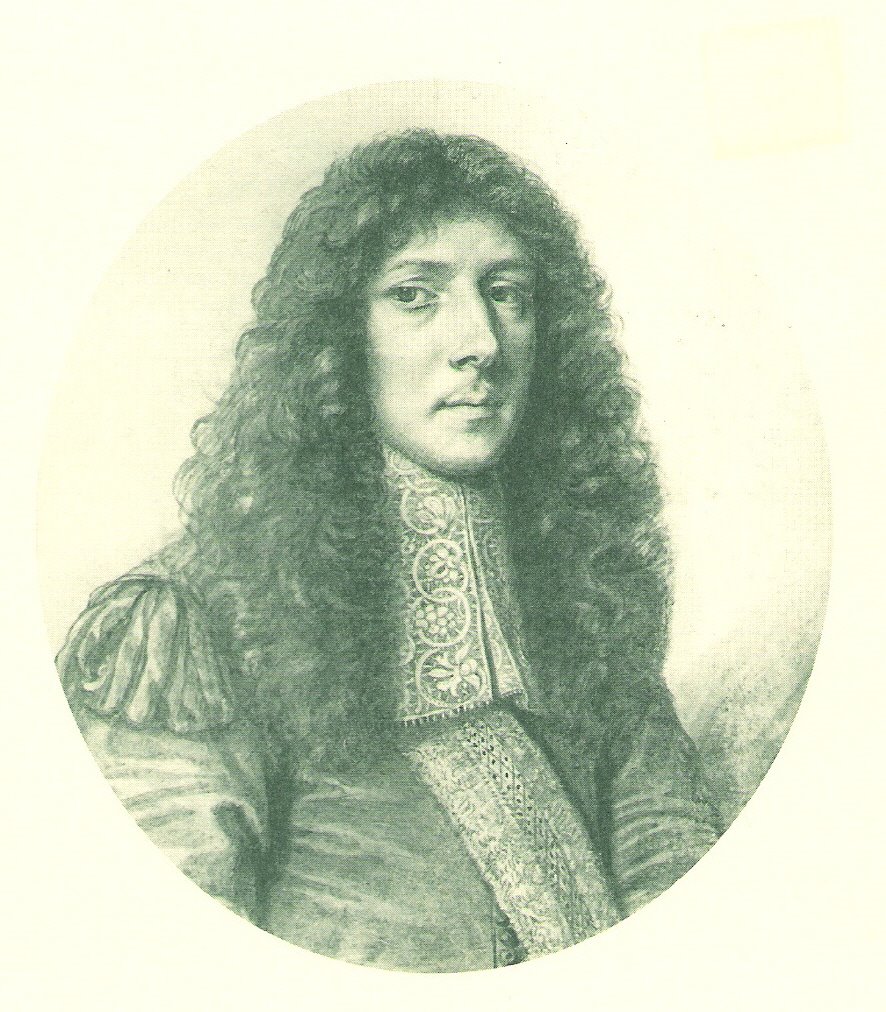
From an inner darkness to a thin mist
John Aubrey may have been described by his friends as, "Shiftless, roving and magotie-headed..." but he was among the first to examine and record Stonehenge, Avebury and other megalithic structures with any degree of accuracy. Writing about Avebury and Stonehenge Aubrey says, "I have brought (them) from an inner darkness to a thin mist." Professionals and amateurs who have a passion for these, and similar places, continue to do so.
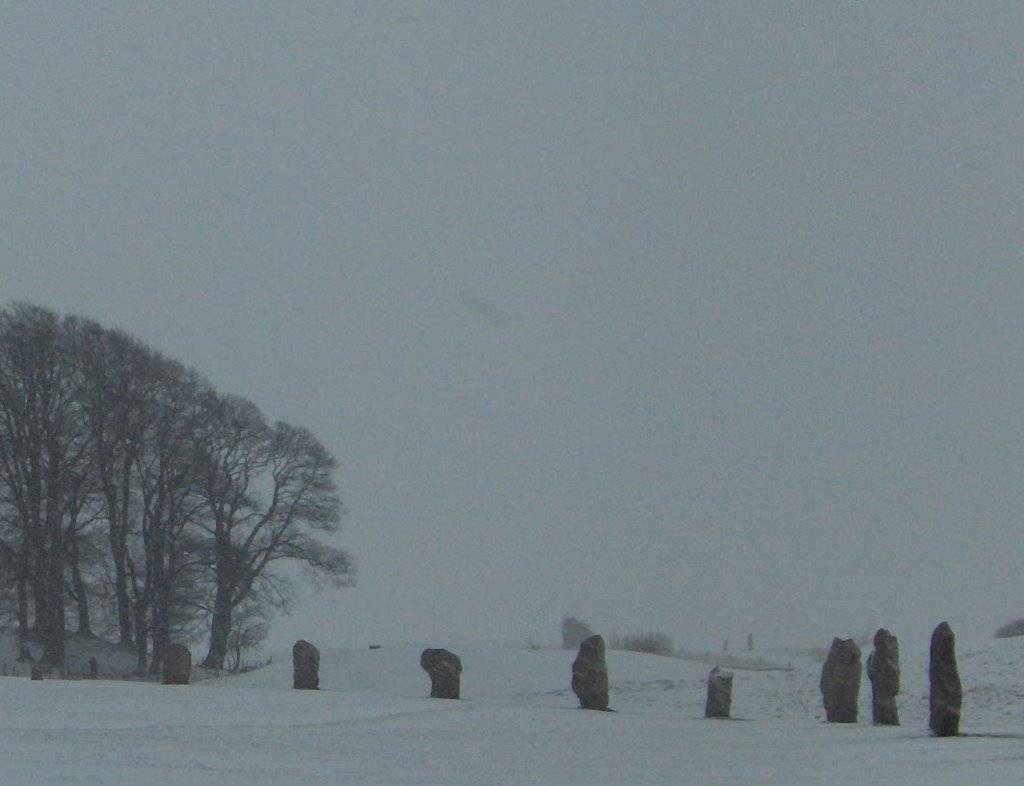
Like hooded mourners
Like hooded mourners
they show no face
they speak no words
they leave no trace
the winter rain
the spring snowfall
the burning sun
and through it all
they watch they wait
Like shrouded dead
they bide their time
they break no silence
they make no sign
their lonely vigil
their unheard call
an endless dream
and through it all
they watch
they wait
slumpy
they show no face
they speak no words
they leave no trace
the winter rain
the spring snowfall
the burning sun
and through it all
they watch they wait
Like shrouded dead
they bide their time
they break no silence
they make no sign
their lonely vigil
their unheard call
an endless dream
and through it all
they watch
they wait
slumpy
Monday, March 19, 2007

Song of Amairgen
I am a wind upon the sea
I am a sea-wave on the land
I am the sound of breaking waves
Encompassing all that I see.
Erin is my lady love
Erin is my heart of gold
Erin is all my joy
And who but my lady Erin?
I am a stag of seven tines
I am a hawk upon a cliff
I am a tear-drop of the sun
Encompassing all that I see.
Fairer than I there is no plant,
I am a battle-hardened boar,
I am a salmon in a pool,
Encompassing all that I see.
A silver lake set in a plain,
The excellence of all the arts,
A battle-waging spear am I
Encompassing all that I see.
Amairgen Glungel son of Mil,
A god who sets the head afire,
The secret of the mountain stones,
Encompassing all that I see.
I invoke the ages of the moon,
And steer the course of the setting sun
Bearing cattle from Tethra's house,
Encompassing all that I see.
The sea is bursting forth of fish,
The skies are full with flights of birds,
Manannan's cattle under wave,
And the land is broad of beasts.
Yvonne Aburrow
I am a sea-wave on the land
I am the sound of breaking waves
Encompassing all that I see.
Erin is my lady love
Erin is my heart of gold
Erin is all my joy
And who but my lady Erin?
I am a stag of seven tines
I am a hawk upon a cliff
I am a tear-drop of the sun
Encompassing all that I see.
Fairer than I there is no plant,
I am a battle-hardened boar,
I am a salmon in a pool,
Encompassing all that I see.
A silver lake set in a plain,
The excellence of all the arts,
A battle-waging spear am I
Encompassing all that I see.
Amairgen Glungel son of Mil,
A god who sets the head afire,
The secret of the mountain stones,
Encompassing all that I see.
I invoke the ages of the moon,
And steer the course of the setting sun
Bearing cattle from Tethra's house,
Encompassing all that I see.
The sea is bursting forth of fish,
The skies are full with flights of birds,
Manannan's cattle under wave,
And the land is broad of beasts.
Yvonne Aburrow
Sunday, March 18, 2007
.jpg)
Saturday, March 17, 2007
The Bard
Weave the warp, and weave the woof,
The winding-sheet of Edward's race.
Give ample room, and verge enough
The characters of hell to trace.
Mark the year, and mark the night,
When Severn shall re-eccho with affright
The shrieks of death, thro' Berkley's roofs that ring,
Shrieks of an agonizing King!
She-Wolf of France, with unrelenting fangs,
That tear'st the bowels of thy mangled Mate,
From thee be born, who o'er thy country hangs
The scourge of Heav'n. What Terrors round him wait!
Amazement in his van, with Flight combined,
And Sorrow's faded form, and Solitude behind.
Thomas Gray (1716-1771)
The winding-sheet of Edward's race.
Give ample room, and verge enough
The characters of hell to trace.
Mark the year, and mark the night,
When Severn shall re-eccho with affright
The shrieks of death, thro' Berkley's roofs that ring,
Shrieks of an agonizing King!
She-Wolf of France, with unrelenting fangs,
That tear'st the bowels of thy mangled Mate,
From thee be born, who o'er thy country hangs
The scourge of Heav'n. What Terrors round him wait!
Amazement in his van, with Flight combined,
And Sorrow's faded form, and Solitude behind.
Thomas Gray (1716-1771)
Thursday, March 08, 2007

Reaching to Reason's sky
Near Wilton sweet, huge stones are found,
But so confused, that neither any eye
Can count them just, nor Reason reason try,
What force brought them to so unlikely ground.
To stranger weights my mind's waste soil is bound,
Of passion-hills, reaching to Reason's sky,
From fancy's earth, passing all number's bound,
Passing all guess, whence into me should fly
So mazed a mass; or, if in me it grows,
A simple soul should breed so mixed woes
Philip Sidney (1554-1586)
But so confused, that neither any eye
Can count them just, nor Reason reason try,
What force brought them to so unlikely ground.
To stranger weights my mind's waste soil is bound,
Of passion-hills, reaching to Reason's sky,
From fancy's earth, passing all number's bound,
Passing all guess, whence into me should fly
So mazed a mass; or, if in me it grows,
A simple soul should breed so mixed woes
Philip Sidney (1554-1586)
Friday, March 02, 2007
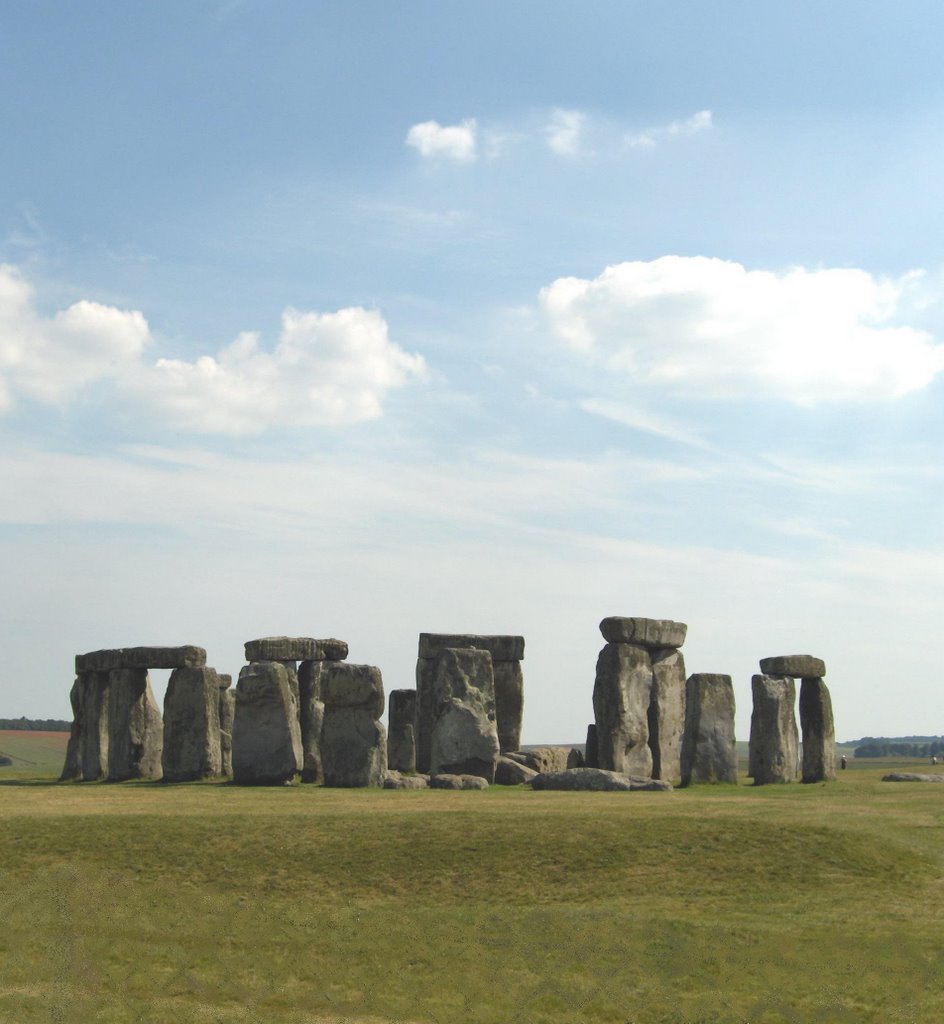
The enormous background of time
You may put a hundred questions to these rough-hewn giants as they bend in grim contemplation of their fallen companions; but your curiosity falls dead in the vast sunny stillness that enshrouds them, and the strange monument, with all its unspoken memories, becomes simply a heart-stirring picture in a land of pictures... I can fancy sitting all a summer's day watching its shadows shorten and lengthen again, and drawing a delicious contrast between the world's duration and the feeble span of individual experience. There is something in Stonehenge almost reassuring; and if you are disposed to feel that life is rather a superficial matter, and that we soon get to the bottom of things, the immemorial grey pillars may serve to remind you of the enormous background of time.
Henry James (1843-1916)
Henry James (1843-1916)
Tuesday, February 27, 2007

Stonehenge
From its singularity, and the mystery attending its origin and appropriation, it has excited more surprise and curiosity than any other relic of antiquity in Great Britain. It is situated about two miles directly west of Amesbury, and seven north of Salisbury, in Wiltshire. When viewed at a distance it appears but a small and trifling object, for its bulk and character are lost in the extensive space which surrounds it; and even on a near examination it fails to fulfil the expectations of the stranger who visits it with exaggerated prepossessions. To behold this "wonder of Britain" it should be viewed with an artist's eye, and contemplated by an intellect stored with antiquarian and historical knowledge. Stonehenge, notwithstanding much that has been said to the contrary, is utterly unlike any monument now remaining in Europe.
Edgar Allan Poe (1809-1849)
Edgar Allan Poe (1809-1849)
Sunday, February 25, 2007

Orb within orb
Mysterious rows
Of rude enormous obelisks, that rise
Orb within orb, stupendous monuments
Of artless architecture, such as now
Oft-times amaze the wandering traveller,
By the pale moon discerned on Sarum's plain.
Gilbert West (1703-1756)
Of rude enormous obelisks, that rise
Orb within orb, stupendous monuments
Of artless architecture, such as now
Oft-times amaze the wandering traveller,
By the pale moon discerned on Sarum's plain.
Gilbert West (1703-1756)
Friday, February 23, 2007

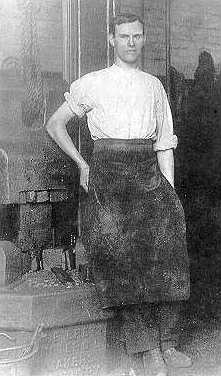
Richard Jefferies and Alfred Williams
Richard Jefferies (1848-1887) and Alfred Williams (1877-1930) were two Swindon poets and writers who, still today, remain relatively unknown outside their home county of Wiltshire. They were men who shared a love of the local countryside and especially a love of the Downs close to their home town. There are commemorative plaques to both men on the Wiltshire section of the Ridgeway and their poems and prose ring with a love of the area.
Examples of Richard Jefferies and Alfred Williams' writings can be found on the following pages, or follow the link to the Richard Jefferies Society at http://richardjefferiessociety.blogspot.com/
Examples of Richard Jefferies and Alfred Williams' writings can be found on the following pages, or follow the link to the Richard Jefferies Society at http://richardjefferiessociety.blogspot.com/
Tuesday, February 20, 2007
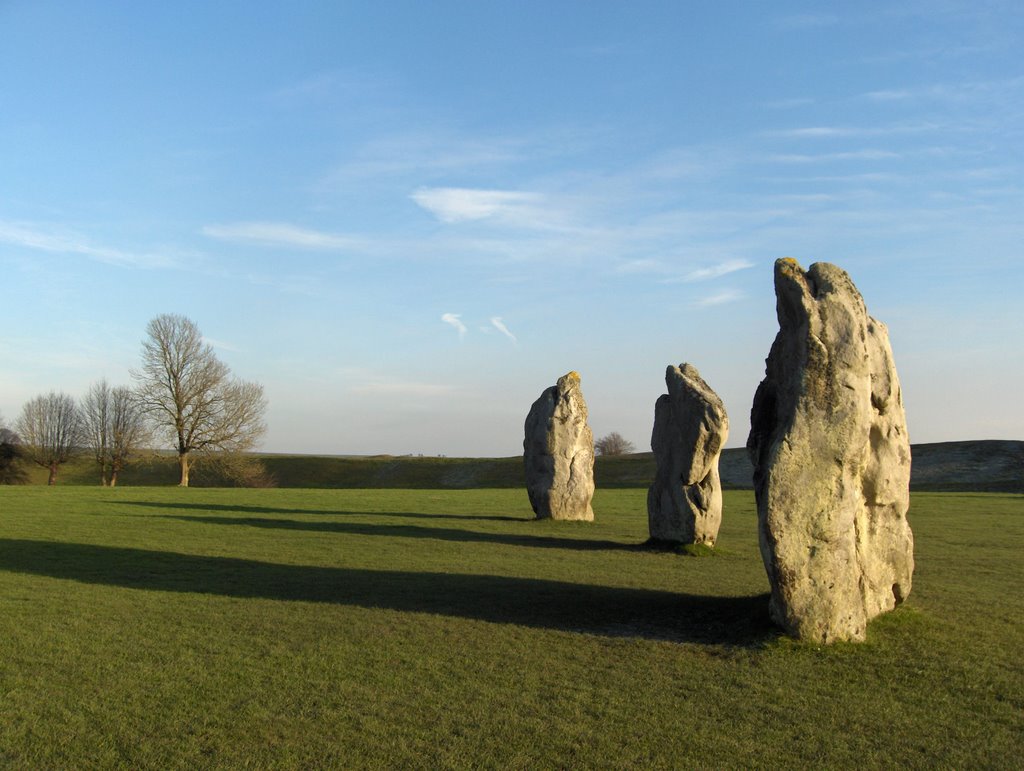
In the afternoon come to Abebury
In the afternoon come to Abebury, where, seeing great stones like those of Stonage standing up, I stopped, and took a countryman of that town, and he carried me and shewed me a place trenched in, like Old Sarum almost, with great stones pitched in it, some bigger than those at Stonage in figure, to my great admiration: and he told me that most people of learning, coming by, do come and view them, and that the King did so: and that the Mount cast hard by is called Selbury, from one King Seall buried there, as tradition says. I did give this man 1s. So took coach again, seeing one place with great high stones pitched round, which, I believe, was once some particular building, in some measure like that of Stonage. But, about a mile off, it was prodigious to see how full the Downes are of great stones; and all along the vallies, stones of considerable bigness, most of them growing certainly out of the ground so thick as to cover the ground, which makes me think the less of the wonder of Stonage, for hence they might undoubtedly supply themselves with stones, as well as those at Abebury.
Samuel Pepys (1633-1703)
Monday, February 19, 2007

Peer into the past
Of times on Liddington's bare peak I love to think and lie,
And muse upon the former day and ancient things gone by,
To pace the old castellum walls and peer into the past,
To learn the secret of the hills, and know myself at last,
To woo Dick Jefferies from his dreams on sorrow's pillow tossed,
And walk with him upon the ridge, and pacify his ghost.
Alfred Williams (1877-1930)
And muse upon the former day and ancient things gone by,
To pace the old castellum walls and peer into the past,
To learn the secret of the hills, and know myself at last,
To woo Dick Jefferies from his dreams on sorrow's pillow tossed,
And walk with him upon the ridge, and pacify his ghost.
Alfred Williams (1877-1930)
Monday, February 12, 2007
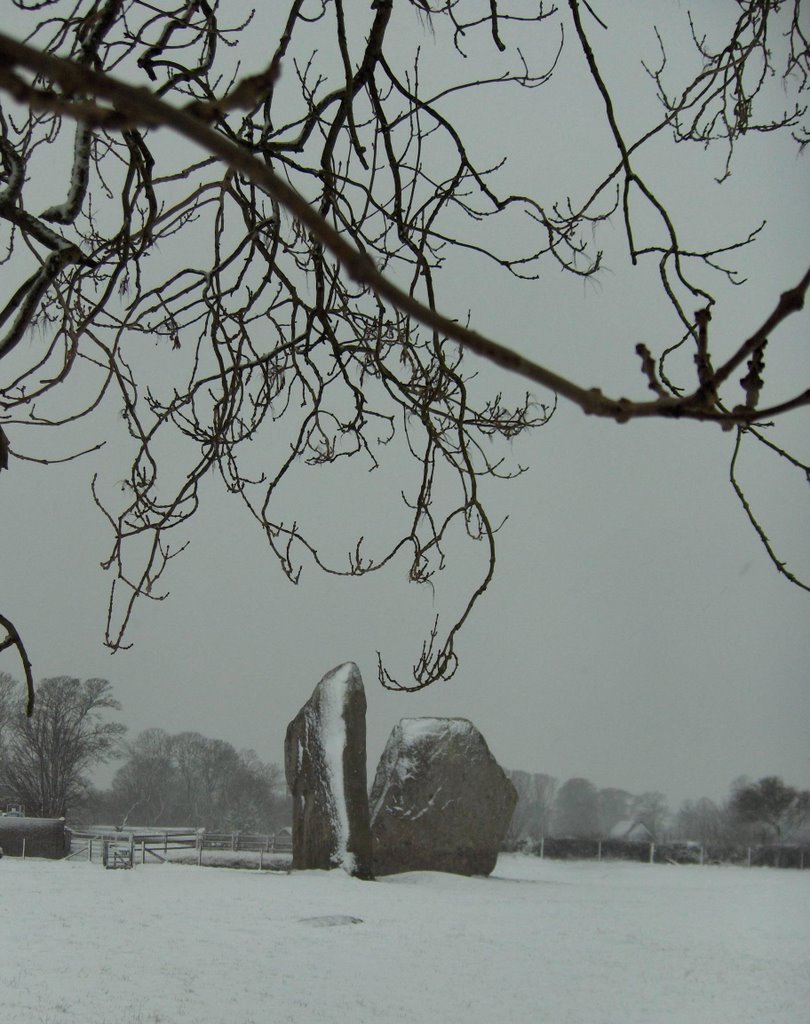
Like a frozen drop of transience
There's a silence here
a silence that lifts and suppresses
all at once.
Lures life into a comfort
then leaves it limp
like a frozen drop of transience
on a quiet winter branch
that might
or might not
spring back to life again.
LS
a silence that lifts and suppresses
all at once.
Lures life into a comfort
then leaves it limp
like a frozen drop of transience
on a quiet winter branch
that might
or might not
spring back to life again.
LS
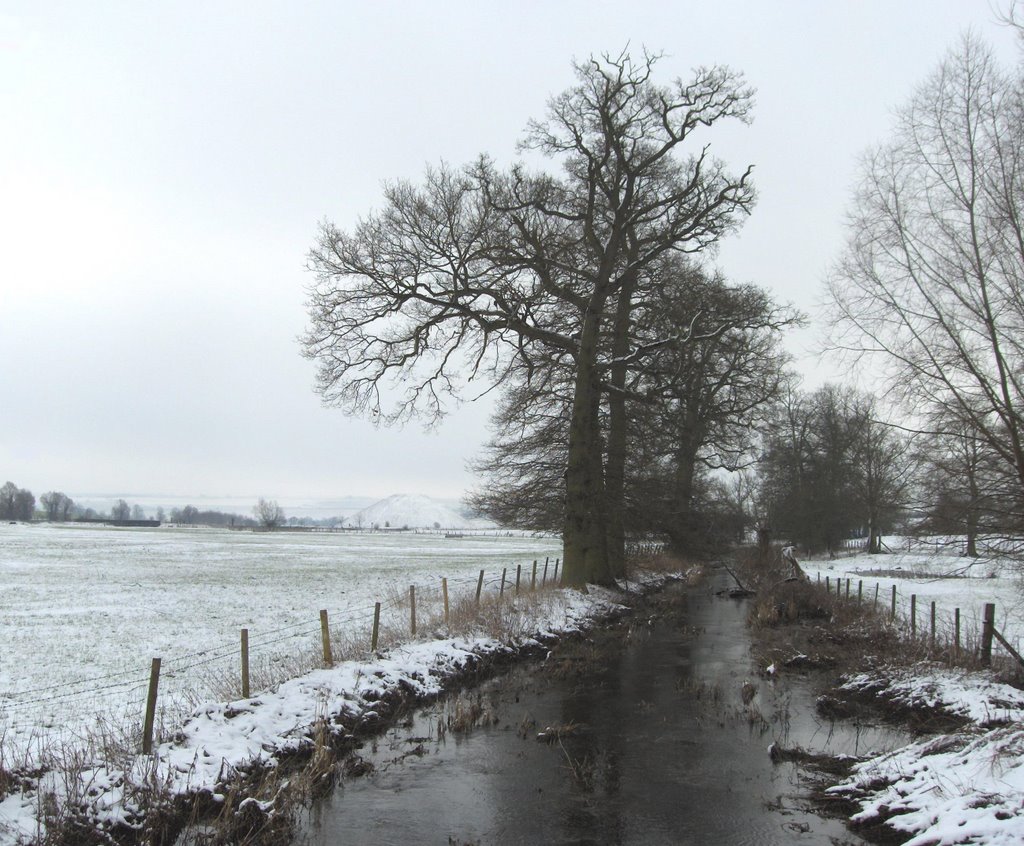
Silbury
Has time stood still?
I wondered
As I gazed upon that hollow hill
Exposed to howling wind and rain
Yet silent, still unmoved
Do spirits sleep within its heart?
I wondered
Looking back into the dark
Where bone is old as stone
And legend first drew breath
This Moon upon the Earth
Once shining bright
Now dulled by soil and turf
With beliefs so long forgotten
Those treasures hidden deep within.
This is a place
Of wonder
Of a celestial embrace
Where the Gods touch the Earth
And the Earth meets the Sky
slumpystones
I wondered
As I gazed upon that hollow hill
Exposed to howling wind and rain
Yet silent, still unmoved
Do spirits sleep within its heart?
I wondered
Looking back into the dark
Where bone is old as stone
And legend first drew breath
This Moon upon the Earth
Once shining bright
Now dulled by soil and turf
With beliefs so long forgotten
Those treasures hidden deep within.
This is a place
Of wonder
Of a celestial embrace
Where the Gods touch the Earth
And the Earth meets the Sky
slumpystones
Sunday, February 11, 2007

Merlin
Six centuries, twice told, are now complete,
Since Merlin liv'd on this terrestrial seat.
Knowledge appear'd but dawning to my sight;
She blazed on Newton with meridian light.
Yet the faint glimm'rings which my genius taught,
Beyond the ken of human thought.
What I by mere mechanic pow'rs achiev'd,
Th'effects of magic, then most believ'd.
To Stonehenge let the sons of art repair,
and view the wonders I erected there;
Try, if their skill improv'd, mine e'er can foil;
Restore the giant's dance t'Hiberian soil.
Nor in geometry excell'd alone;
But other sciences to me were known.
I study'd Nature through her various ways;
And chaunted to this harp prophetic lays.
To Cader Ydris oft I took my ways;
Rose with the sun, toil'd up th'ascent all day;
But scarce could reach the mountain's tow'ring height,
E're radiant Vesper usher'd in the night.
The summit gain'd, I sought with naked eye,
To penetrate the wonders of the sky.
No telescopic glass known in that age,
To assist the optics of the curious sage.
Though lov'd astronomy oft charm'd my mind,
I now erroneous all my notions find.
I thought the bright sol around our globe had run,
Nor knew earth's motion, nor the central sun,
And had I known, cou'd I believe have gain'd,
When Ignorance and Superstition reign'd?
Unseen my me, attraction's might force,
And how fierce comets run their stated course;
Surprising scenes! by Heav'n reserv'd in store,
For its own fav'rite, Newton, to explore.
With faculties enlarg'd, he's gone to prove,
The laws and motions of yon worlds above;
And the vast circuits of th'expanse survey;
View solar systems in the Milky Way
My spirit too through ether wings its flight,
Discovering Truths deny'd by mortal sight;
Transported, hovers o'er my native isle,
Where arts improve, and Peace and Plenty smile.
Ann Finch (1661–1720)
Since Merlin liv'd on this terrestrial seat.
Knowledge appear'd but dawning to my sight;
She blazed on Newton with meridian light.
Yet the faint glimm'rings which my genius taught,
Beyond the ken of human thought.
What I by mere mechanic pow'rs achiev'd,
Th'effects of magic, then most believ'd.
To Stonehenge let the sons of art repair,
and view the wonders I erected there;
Try, if their skill improv'd, mine e'er can foil;
Restore the giant's dance t'Hiberian soil.
Nor in geometry excell'd alone;
But other sciences to me were known.
I study'd Nature through her various ways;
And chaunted to this harp prophetic lays.
To Cader Ydris oft I took my ways;
Rose with the sun, toil'd up th'ascent all day;
But scarce could reach the mountain's tow'ring height,
E're radiant Vesper usher'd in the night.
The summit gain'd, I sought with naked eye,
To penetrate the wonders of the sky.
No telescopic glass known in that age,
To assist the optics of the curious sage.
Though lov'd astronomy oft charm'd my mind,
I now erroneous all my notions find.
I thought the bright sol around our globe had run,
Nor knew earth's motion, nor the central sun,
And had I known, cou'd I believe have gain'd,
When Ignorance and Superstition reign'd?
Unseen my me, attraction's might force,
And how fierce comets run their stated course;
Surprising scenes! by Heav'n reserv'd in store,
For its own fav'rite, Newton, to explore.
With faculties enlarg'd, he's gone to prove,
The laws and motions of yon worlds above;
And the vast circuits of th'expanse survey;
View solar systems in the Milky Way
My spirit too through ether wings its flight,
Discovering Truths deny'd by mortal sight;
Transported, hovers o'er my native isle,
Where arts improve, and Peace and Plenty smile.
Ann Finch (1661–1720)
Saturday, January 27, 2007
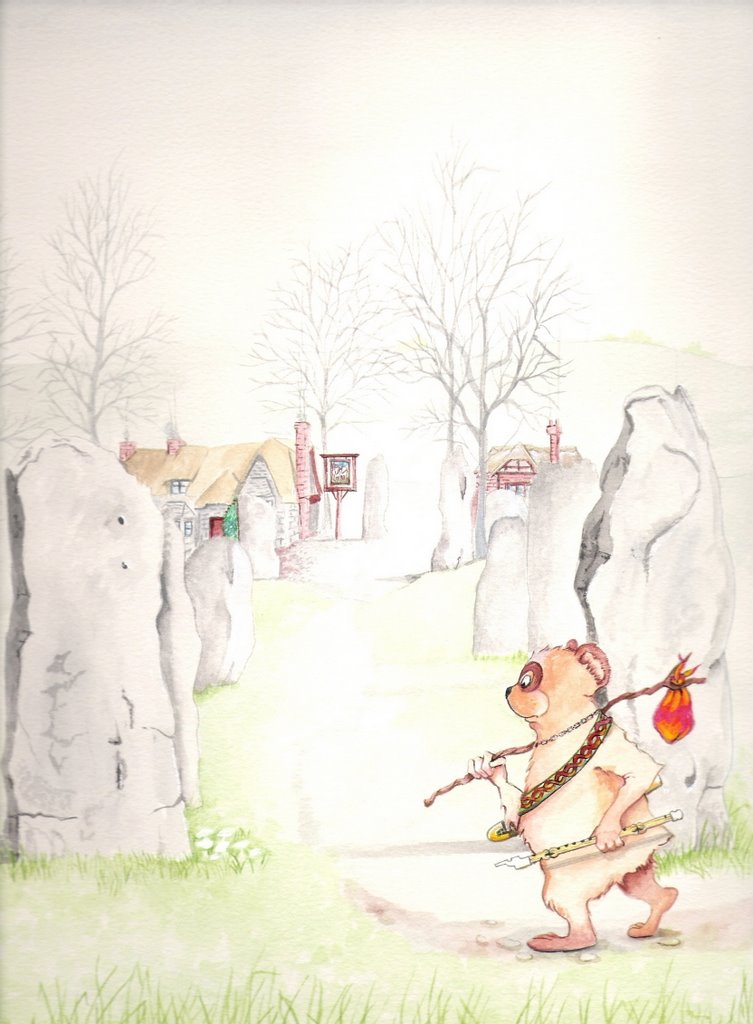
The Great Lesson
Little Stone glanced at Red Dawn and smiled. "It seems our little fury friend has a lesson he wants to teach us this morning." Red Dawn smiled in return. "I think it is his forest which wants to teach us a lesson," she said. "And perhaps it is time for us to learn."
"Listen," said Zappo, not very pleased at being referred to as their little fury friend. "Morindoor is only the tip of the iceberg, or perhaps I should say the top of the dung heap! I will destroy Morindoor and his evil ways, make no mistake of that. But when he is gone, there are little Morindoors in every man and woman's heart. It is mankind who in the end must destroy the greed and destruction within its own heart."
He smiled at them and continued in a softer voice. "My friends, we have only one earth. She is like a beautiful queen with eyes the colour of the deep blue seas. Her song is the song of all living things. Every time one of those things dies, her song dies a little too. A word or note is lost, never to return. In all the ages, and in all the spaces of the universe, that beauty has gone forever. It may only be a little flower, or perhaps a great sea fish, or a flying bird, or a coloured insect, or maybe it is a medicine plant. But when it is gone, it is gone forever. Do you understand? That which has taken a thousand, thousand years and more to bring its gifts to the earth, and to you and me, has gone... never to return."
Zappo looked into their eyes with an intensity they had never seen before. Suddenly they knew that their journey North to fight Morindoor and save the little Princess Astra was only part of their quest. In their hands rested the safety of the forests, the sweetness of the seas, the beauty of the skies, the mysteries everywhere: even the future of mankind itself, for without their Earth Queen, with her wonders and her beauty, there could be no future and no home for mankind either.
"Zappo, how do we destroy the Morindoor within our own hearts?" asked Little Stone. Red Dawn also looked at him with questioning eyes... "Look at it this way," replied Zappo, "everything we have was already waiting for us when we were born, and then it was given, or I should say lent to us. From the air we breathe, to the water we drink. Nothing is really ours, although sometimes we try to pretend it is, by buying it or, like Morindoor, stealing and destroying it! But really, everything belongs to the earth, to the Earth Queen. She lets us use her gifts for a little while, and then she asks for them back. But that is not all. When you borrow something, from a friend for example, you try to take care of it, you do not break it or lessen it in any way. And when you return it, it should be as good, if not better, than when you first borrowed it."
Red Dawn and Little Stone nodded. "It is the same with the gifts you borrow from the earth," continued Zappo. "If you cut down a tree, make sure you are not harming anything else that may depend on the tree, and afterwards, make sure you plant another one to take its place. That is not always easy but with care it can be done. Borrow from the oceans, and from the forests, and from the skies, they are all gifts from the Earth Queen, but do not change or hurt them to the point where they can never be replaced. Enjoy them, and then return them to her. Learn from her gifts, and then walk forward. That is your gift to the earth."
Zappo put his hands behind his head and lay back on the leafy forest floor. "The Earth Queen is much greater than you or I," he said, gazing up through the branches into the clear blue sky, "and the likes of Morindoor are less than grains of sand beneath her feet. She is a kind and gentle Queen, unless you try to hurt her, or her children, and her children are many. They are the leaves on the trees. They are the stones on the ground, and the birds in the skies. They are everything that is upon the Earth, whether it breathes or does not breathe. They are even the fire that burns, and the water that boils, deep within her. They are the clouds and the winds that swirl and surround her. You cannot hurt even one of those things without hurting them all. And if you hurt the Earth too much, in the way that Morindoor is doing, the Queen will turn upon you. And then, my friends, you cannot even begin to imagine her wrath. Even without you and me, she would sweep aside Morindoor like a wasp before the wind."
"Zappo," said Little Stone, "you seem to know so much about the Earth." Zappo stretched and sat up. "I was a child in this forest when the great cedar trees were still seeds. Do you know how long ago that was my friends? But even that was not as long ago as when my folk were first here, and we are not the oldest creatures in the Forest Seven."
"What is the oldest creature here?" asked Red Dawn.
"I'm not sure," answered Zappo. "But I will show you something that has seen and heard more than anything else that I know."...
"Listen," said Zappo, not very pleased at being referred to as their little fury friend. "Morindoor is only the tip of the iceberg, or perhaps I should say the top of the dung heap! I will destroy Morindoor and his evil ways, make no mistake of that. But when he is gone, there are little Morindoors in every man and woman's heart. It is mankind who in the end must destroy the greed and destruction within its own heart."
He smiled at them and continued in a softer voice. "My friends, we have only one earth. She is like a beautiful queen with eyes the colour of the deep blue seas. Her song is the song of all living things. Every time one of those things dies, her song dies a little too. A word or note is lost, never to return. In all the ages, and in all the spaces of the universe, that beauty has gone forever. It may only be a little flower, or perhaps a great sea fish, or a flying bird, or a coloured insect, or maybe it is a medicine plant. But when it is gone, it is gone forever. Do you understand? That which has taken a thousand, thousand years and more to bring its gifts to the earth, and to you and me, has gone... never to return."
Zappo looked into their eyes with an intensity they had never seen before. Suddenly they knew that their journey North to fight Morindoor and save the little Princess Astra was only part of their quest. In their hands rested the safety of the forests, the sweetness of the seas, the beauty of the skies, the mysteries everywhere: even the future of mankind itself, for without their Earth Queen, with her wonders and her beauty, there could be no future and no home for mankind either.
"Zappo, how do we destroy the Morindoor within our own hearts?" asked Little Stone. Red Dawn also looked at him with questioning eyes... "Look at it this way," replied Zappo, "everything we have was already waiting for us when we were born, and then it was given, or I should say lent to us. From the air we breathe, to the water we drink. Nothing is really ours, although sometimes we try to pretend it is, by buying it or, like Morindoor, stealing and destroying it! But really, everything belongs to the earth, to the Earth Queen. She lets us use her gifts for a little while, and then she asks for them back. But that is not all. When you borrow something, from a friend for example, you try to take care of it, you do not break it or lessen it in any way. And when you return it, it should be as good, if not better, than when you first borrowed it."
Red Dawn and Little Stone nodded. "It is the same with the gifts you borrow from the earth," continued Zappo. "If you cut down a tree, make sure you are not harming anything else that may depend on the tree, and afterwards, make sure you plant another one to take its place. That is not always easy but with care it can be done. Borrow from the oceans, and from the forests, and from the skies, they are all gifts from the Earth Queen, but do not change or hurt them to the point where they can never be replaced. Enjoy them, and then return them to her. Learn from her gifts, and then walk forward. That is your gift to the earth."
Zappo put his hands behind his head and lay back on the leafy forest floor. "The Earth Queen is much greater than you or I," he said, gazing up through the branches into the clear blue sky, "and the likes of Morindoor are less than grains of sand beneath her feet. She is a kind and gentle Queen, unless you try to hurt her, or her children, and her children are many. They are the leaves on the trees. They are the stones on the ground, and the birds in the skies. They are everything that is upon the Earth, whether it breathes or does not breathe. They are even the fire that burns, and the water that boils, deep within her. They are the clouds and the winds that swirl and surround her. You cannot hurt even one of those things without hurting them all. And if you hurt the Earth too much, in the way that Morindoor is doing, the Queen will turn upon you. And then, my friends, you cannot even begin to imagine her wrath. Even without you and me, she would sweep aside Morindoor like a wasp before the wind."
"Zappo," said Little Stone, "you seem to know so much about the Earth." Zappo stretched and sat up. "I was a child in this forest when the great cedar trees were still seeds. Do you know how long ago that was my friends? But even that was not as long ago as when my folk were first here, and we are not the oldest creatures in the Forest Seven."
"What is the oldest creature here?" asked Red Dawn.
"I'm not sure," answered Zappo. "But I will show you something that has seen and heard more than anything else that I know."...
Wednesday, January 17, 2007
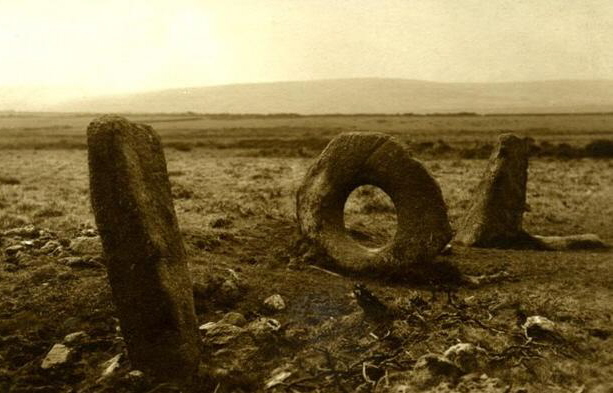
Penwith
Did flint tools or alone the driving rain
complete its holy paradox: granite
yet sensitive as a bone?
Nine maidens petrified for sabbath dancing
or sun-discs crouched in an altar-less ring
in a misty field the sea's whetstone hones
to a sharp blade; the sun tests it, aslant.
On the humped moor's spine, consumptive miners
turned aside from their plod home to crouch and pass
through the men-an-tol, the ring of granite.
I am the loganstone a cloud can alter,
inert mass trembling on a compass point;
I am the men-an-tol, the wind's vagina;
I am the circle of stones grouped around grass.
D M Thomas
complete its holy paradox: granite
yet sensitive as a bone?
Nine maidens petrified for sabbath dancing
or sun-discs crouched in an altar-less ring
in a misty field the sea's whetstone hones
to a sharp blade; the sun tests it, aslant.
On the humped moor's spine, consumptive miners
turned aside from their plod home to crouch and pass
through the men-an-tol, the ring of granite.
I am the loganstone a cloud can alter,
inert mass trembling on a compass point;
I am the men-an-tol, the wind's vagina;
I am the circle of stones grouped around grass.
D M Thomas
Wednesday, January 10, 2007
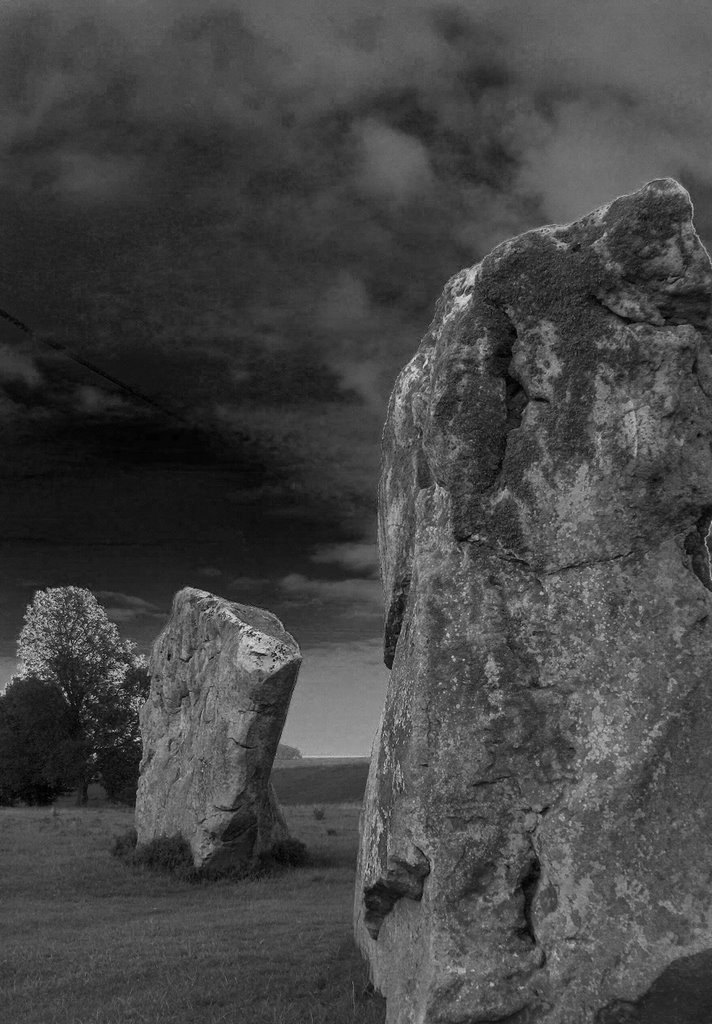
There in the midst of the paths, in the midst of the winds
From time without
end
you rest
there in the midst of the paths
in the midst of the winds
you rest
covered with the droppings of birds
grass growing from you feet
your head decked with the down of bird
you rest
in the midst of the winds
you wait
Aged one.
end
you rest
there in the midst of the paths
in the midst of the winds
you rest
covered with the droppings of birds
grass growing from you feet
your head decked with the down of bird
you rest
in the midst of the winds
you wait
Aged one.
Thursday, January 04, 2007
Out of the strong came forth sweetness
Such a small band of brothers and sisters, sharing our love for stones and still places. Easy to forget that they endure while we do not. And in our passing by we might smile and squabble or write a line or two but then, too soon, are gone again.
Thank you for your words Rebecca, and for your feelings, and for your insights.
Thank you for your words Rebecca, and for your feelings, and for your insights.
Monday, January 01, 2007

Maeshowe
Circle of light and darkness, be our sign.
We move in shadows,
Brodgar has burned on the moor a dance of sun.
Ring of quern and plough, contain
Our tumults of blood.
The stars' chaos is caught in a strict rein.
Wheel of life and death, remove
The sweet warm breath.
Ingibiorg flowers in stone, all beauty and love.
Round of sun and snow and seed,
Out of those skulls
Breaks the first green shoot, the full ear, then the bread.
George Mackay Brown (1921-1996)
We move in shadows,
Brodgar has burned on the moor a dance of sun.
Ring of quern and plough, contain
Our tumults of blood.
The stars' chaos is caught in a strict rein.
Wheel of life and death, remove
The sweet warm breath.
Ingibiorg flowers in stone, all beauty and love.
Round of sun and snow and seed,
Out of those skulls
Breaks the first green shoot, the full ear, then the bread.
George Mackay Brown (1921-1996)
Subscribe to:
Posts (Atom)