
Friday, July 14, 2006

Stanton Drew
First you dismantle the landscape.
Take away everything you first
Thought of. Trees must go,
Roads, of course, the church,
Houses, hedges, livestock, a wire
Fence. The river can stay,
But loses its stubby fringe
Of willows. What do you
See now? Grass, the circling
Mendip rim, with its notches
Fresh, like carving. A sky
Like ours, but empty along
Its lower levels. And earth
Stripped of its future, tilted
Into meaning by these stones,
Pitted and unemphatic. Re-create them.
They are the most permanent
Presences here, but cattle, weather
Archaeologists have rubbed against them.
Still in season they will
Hold the winter sun poised
Over Maes Knoll's white cheek,
Chain the moon's footsteps to
The pattern of their dance.
Stand inside the circle. Put
Your hand on stone. Listen
To the past's long pulse.
U A Fanthorpe
Thursday, July 13, 2006
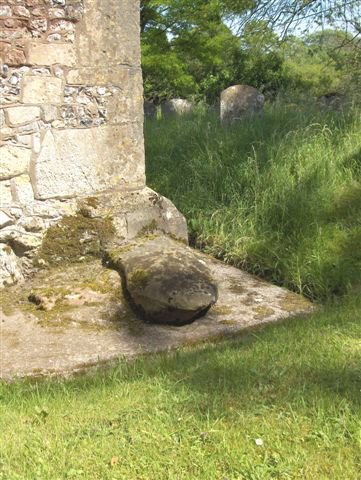
Us, soldiers of the stony hearth
Us, soldiers of the stony hearth
Hewing homage to a crowded sky
Hanging heaven onto maiden Earth
Cut stone forever cannot die.
From us, builders, comes forth god
From us, darkness comes forth light
From us all is overawed.
Us, sculptured artists of the night.
Thirteen twelve's, a sacred number
Cut in stone in all we've made
All we've made is torn asunder,
But stone remains, while all will fade.
"Ah, Man! Your stone remains, but NOT forever.
All Rocks. All Man. All dust together."
Donny McIntyre
Wednesday, July 12, 2006

Calanais
To the stones again I go
I know what I will see
but this feeling always meets me
love and expectancy
dark looming mountains on the way
low rain clouds hang, ready to meet
with the land so full of water
not that much land actually
and the machair filled with flowers
cotton white, like snow to be
spread on and on forever, so heavenly
Then it's there, proud on the hilltop
stands tall and bold for all to see
Calanais sits awaiting
how many visitors will there be
to revere and be amazed
that it has stood for all those days
and what purpose has it played
in its own history?
Maybe a place of worship to the gods
they loved
for their harvests and the ones they took
who they thought they'd laid forever
ashes in the cairn to rest easy
or could it really be an act of love
out of respect for the mountains four
that are the 'old woman of the moor'
to pay homage for her watching over
mountain, moor and sea
cos she inspires awe in me
So if you get to Calanais
take no expectations of what will be
something unforgettably
a time you will remember
the only tool that you will need
is a mind that's open with eyes that greed
and take in the vista there to see
lochs, peatland, moor and mountains
Calanais has a place deep inside me
I am so glad that they found them
Krista
Tuesday, July 11, 2006
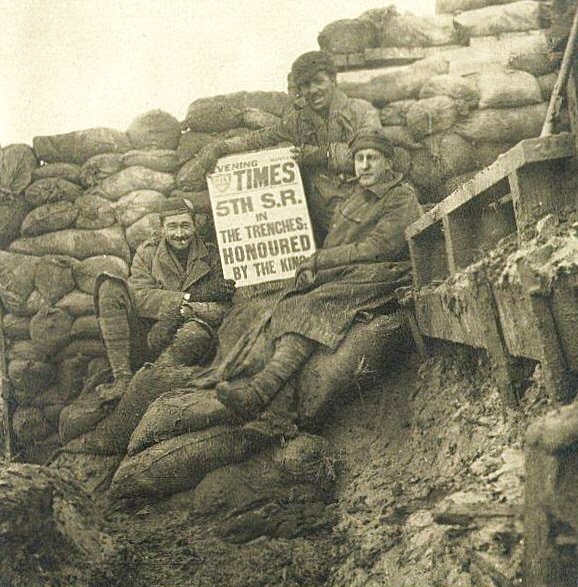
Barbury Camp
We burrowed night and day with tools of lead,
Heaped the bank up and cast it in a ring
And hurled the earth above. And Caesar said,
“Why, it is excellent. I like the thing.”
We, who are dead,
Made it, and wrought, and Caesar liked the thing.
And here we strove, and here we felt each vein
Ice-bound, each limb fast-frozen, all night long.
And here we held communion with the rain
That lashed us into manhood with its thong,
Cleansing through pain.
And the wind visited us and made us strong.
Up from around us, numbers without name,
Strong men and naked, vast, on either hand
Pressing us in, they came. And the wind came
And bitter rain, turning grey all the land
That was our game,
To fight with men and storms, and it was grand.
For many days we fought them, and our sweat
Watered the grass, making it spring up green,
Blooming for us. And, if the wind was wet,
Our blood wetted the wind, making it keen
With the hatred
And wrath and courage that our blood had been.
So, fighting men and winds and tempests, hot
With joy and hate and battle-lust, we fell
Where we fought. And God said, “Killed at last then?
What!
Ye that are too strong for heaven, too clean for hell,
(God said) stir not.
This be your heaven, or, if ye will, your hell.”
So again we fight and wrestle, and again
Hurl the earth up and cast it in a ring.
But when the wind comes up, driving the rain
(Each rain-drop a fiery steed), and the mists rolling
Up from the plain,
This wild procession, this impetuous thing.
Hold us amazed. We mount the wind-cars, then
Whip up the steeds and drive through all the world,
Searching to find somewhere some brethren,
Sons of the winds and waters of the world.
We, who were men,
Have sought, and found no men in all this world.
Wind, that has blown here always ceaselessly,
Bringing, if any man can understand,
Might to the mighty, freedom to the free;
Wind, that has caught us, cleansed us, made us grand,
Wind that is we
(We that were men)—make men in all this land,
That so may live and wrestle and hate that when
They fall at last exultant, as we fell,
And come to God, God may say, “Do you come then
Mildly enquiring, is it heaven or hell?
Why! Ye were men!
Back to your winds and rains. Be these your heaven and hell!”
Charles Hamilton Sorley (1895-1915)
Wednesday, July 05, 2006

Tess of the d'Urbervilles by Thomas Hardy
The wind, playing upon the edifice, produced a booming tune, like the note of some gigantic one-stringed harp. No other sound came from it, and lifting his hand and advancing a step or two, Clare felt the vertical surface of the structure. It seemed to be of solid stone, without joint or moulding. Carrying his fingers onward he found that what he had come in contact with was a colossal rectangular pillar; by stretching out his left hand he could feel a similar one adjoining. At an indefinite height overhead something made the black sky blacker, which had the semblance of a vast architrave uniting the pillars horizontally. They carefully entered beneath and between; the surfaces echoed their soft rustle; but they seemed to be still out of doors. The place was roofless.
In the far north-east sky he could see between the pillars a level streak of light. The uniform concavity of black cloud was lifting bodily like the lid of a pot, letting in at the earth's edge the coming day, against which the towering monoliths and trilithons began to be blackly defined.
The band of silver paleness along the east horizon made even the distant parts of the Great Plain appear dark and near; and the whole enormous landscape bore that impress of reserve, taciturnity, and hesitation which is usual just before day. The eastward pillars and their architraves stood up blackly against the light, and the great flame-shaped Sun-stone beyond them; and the Stone of Sacrifice midway. Presently the night wind died out, and the quivering little pools in the cup-like hollows of the stones lay still.

Hyperion: Book II
Scarce images of life, one here, one there,
Lay vast and edgeways; like a dismal cirque
Of Druid stones, upon a forlorn moor,
When the chill rain begins at shut of eve,
In dull November, and their chancel vault,
The Heaven itself, is blinded throughout night.
Each one kept shroud, nor to his neighbour gave
Or word, or look, or action of despair.
John Keats
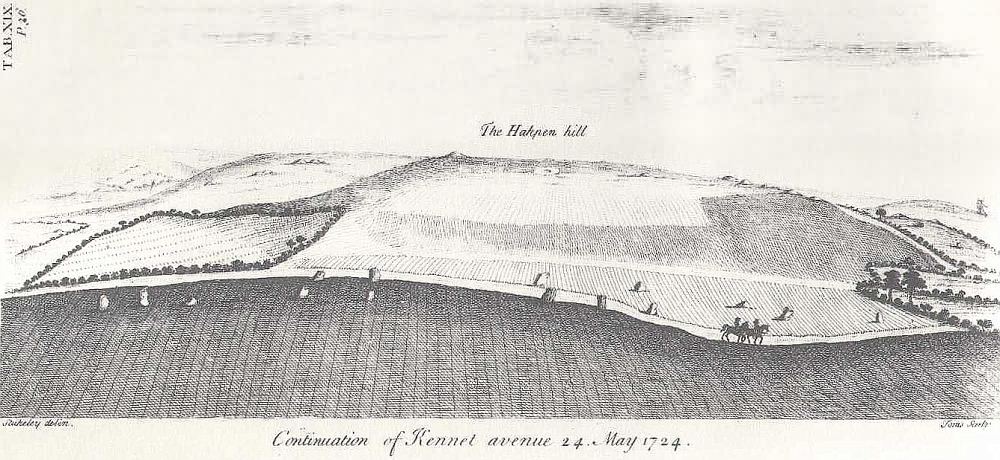
A place for heart and soul
Summer solstice and a familiar road to take you there.
Clacket Lane Services for a stretch and a sandwich
then on into Berkshire where the trees and spaces
gently stretch heart and mind to their own making.
And just after Membury comes a sight to bring you home
a line of Downland like your lover's lines in the morning.
Softly sailing into an ancient dreamland
where time itself stalls and shimmers still.
Take the old Roman road to Marlborough at junction 15
or exit at 16 and up the hill to Hackpen?
It doesn't really matter
this is home now and a little indescribable but
nonetheless home.
Silage and slowness and cheaper beer
a place where you can stretch a while without being charged for it.
Mud on the road, people with maps, muddy boots, ideas and drums.
A place where the world changes without changing.
A place where there's still a place for heart and soul
inviting you to reach out and make it your own.
A place to stroll and whisper and smile.
A place where you know you've got it right.
LS
Sunday, June 25, 2006

The Monument Commonly Called Long Meg and Her Daughters, Near the River Eden
A weight of awe, not easy to be borne,
Fell suddenly upon my Spirit -- cast
From the dread bosom of the unknown past,
When first I saw that family forlorn.
Speak Thou, whose massy strength and stature scorn
The power of years -- pre-eminent, and placed
Apart, to overlook the circle vast --
Speak, Giant-mother! tell it to the Morn
While she dispels the cumbrous shades of Night;
Let the Moon hear, emerging from a cloud;
At whose behest uprose on British ground
That Sisterhood, in hieroglyphic round
Forth-shadowing, some have deemed, the infinite
The inviolable God, that tames the proud!
William Wordsworth
Sunday, June 18, 2006

Who put 'em there
I will not forget, the stones that are set
In a round, on Salisbury plaines,
Though who put 'em there, 'tis hard to declare,
The Romans, or Merlin or Danes.
Walter Pope (1630-1714)
In a round, on Salisbury plaines,
Though who put 'em there, 'tis hard to declare,
The Romans, or Merlin or Danes.
Walter Pope (1630-1714)
Tuesday, June 13, 2006

Friday, June 09, 2006
The still heady smell of elderflower
Coming up to midnight
Friday, 2005.
Car loaded, water and a sandwich in the fridge for the journey down tomorrow.
Leaving Essex a little after 4am.
Lock the doors, climb into the cockpit.
First stop Mum and Dad at the back of Pewsey churchyard
safe now in their circle and mine.
Fresh flowers and a solstice smile to them and all that went before.
Then gently into the Vale of Pewsey.
Windows down, wind blowing a year's worries away.
Skylarks and the still heady smell of elderflower.
And before the people gather there
a quiet stroll around my favourite Avebury stones and secret bank
still mist-surrounded and expectant.
LS
Subscribe to:
Posts (Atom)

